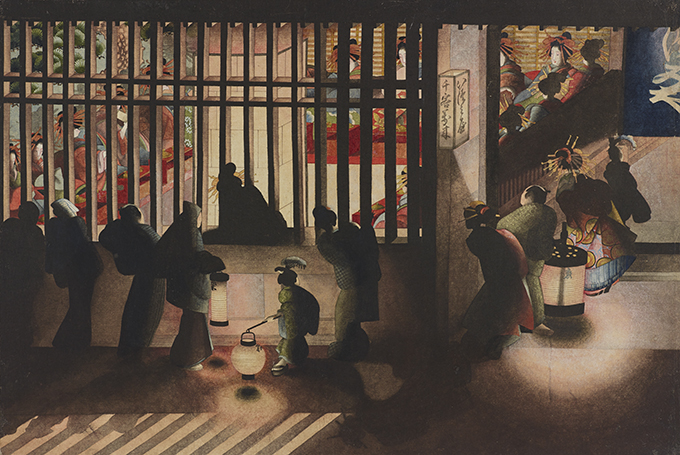
Katsushika Oi “Night Scene in the Yoshiwara” -The Lineage of Nightscapes

2026, Octber 6th-December 6th
[1st Term] Octber 6th-November 3rd
[2nd Term] November 7th-December 6th
Will be closed on Octber 13, 19, 26, November 2, 4-6, 9, 16, 24, 30.
Opening Hours : 10:30 a.m. – 5:30 p.m. (Last Admission: 5:00 p.m.)
Admission : Adult ¥1200 / University and High school students ¥800 / Junior High School Students and below(under 15 years old) FREE
※Please note that weekends, public holidays, and the final days of the exhibition period tend to be very busy. If your schedule permits, we kindly ask that you visit on a weekday and as early in the exhibition period as possible. Thank you for your understanding and cooperation.
Katsushika Ōi was a talented ukiyo-e artist and the daughter of Hokusai. Her masterpiece, Night Scene in the Yoshiwara, is renowned for its vivid contrast of light and shadow, which brings the pleasure district to life after dark. Celebrated as a masterpiece of ukiyo-e night scenes, this work is being presented to the public for the first time in three years, offering visitors a rare opportunity to appreciate its unique beauty.
The exhibition also features outstanding nocturnal works by masters such as Suzuki Harunobu, Utagawa Hiroshige, and Kobayashi Kiyochika. In addition, it introduces rarely seen night scenes created for overseas markets from the late Meiji period onward.
Tracing the evolution of night-scene imagery from the Edo period through the Meiji and Taishō periods, this exhibition invites visitors to rediscover the brilliance of Night Scene in the Yoshiwara.
1. A Must-See Masterpiece by Katsushika Ōi
Katsushika Ōi has attracted widespread attention in recent years through television dramas, films, and anime. However, only about a dozen of her hand-painted works are known to exist worldwide. Among these works, Yoshiwara Kōshi Saki no Zu (Night Scene in the Yoshiwara) is her defining masterpiece, celebrated for its inventive composition and striking contrast between light and shadow. This exhibition offers a rare opportunity to view one of Ōi’s most acclaimed works.
2. Experience Masterpieces of the Night
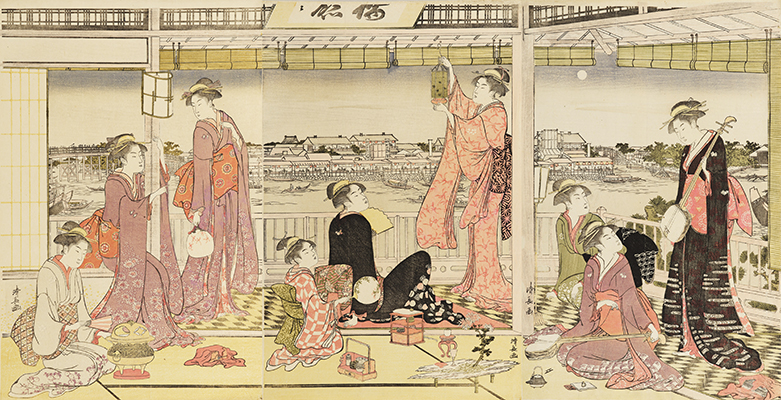
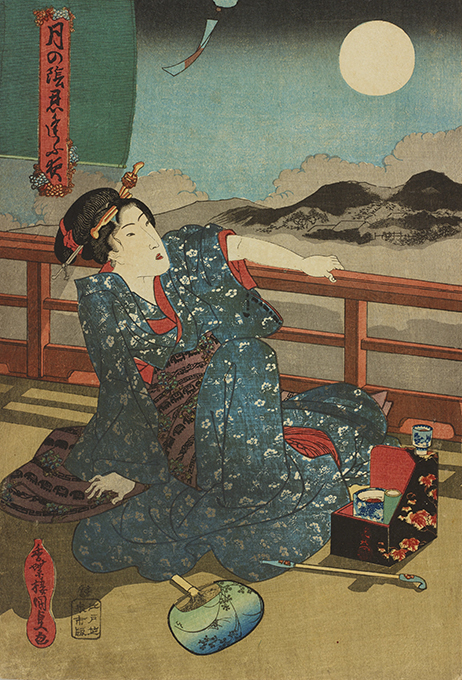
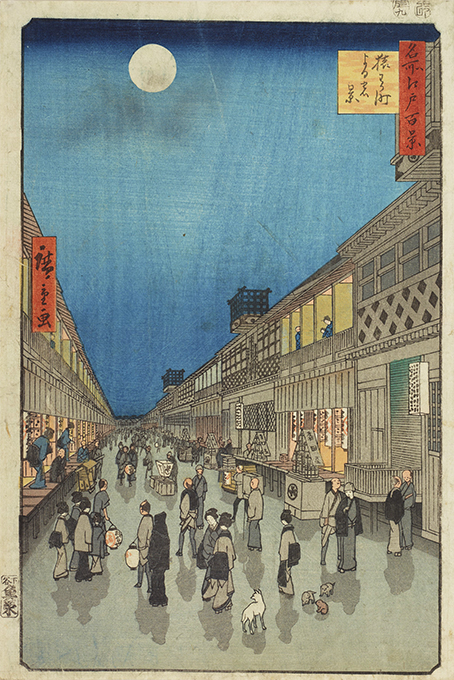
From starlit evenings and summer nights illuminated by fireworks to rainy nights beneath heavy clouds, ukiyo-e artists have explored the interplay of light and darkness. Utagawa Hiroshige, famed for his Prussian-blue skies, and Kobayashi Kiyochika, who poetically rendered Tokyo’s modernizing nightscapes, are central figures within this art tradition. The exhibition also features night scenes by Torii Kiyonaga, Keisai Eisen, Utagawa Kuniyoshi, Tsukioka Yoshitoshi, Inoue Yasuji, Ogura Ryūson, and others.
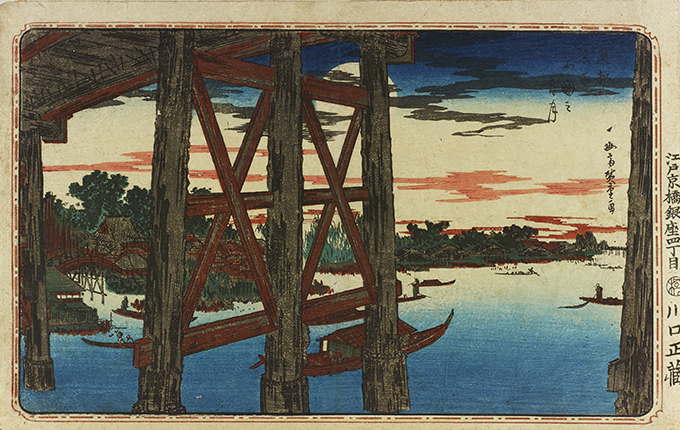
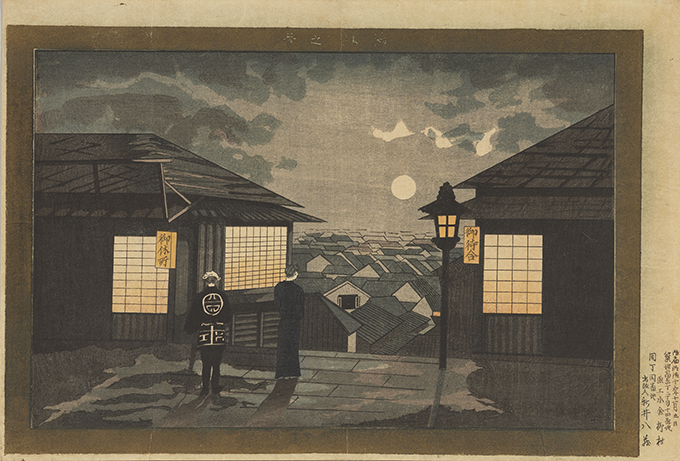


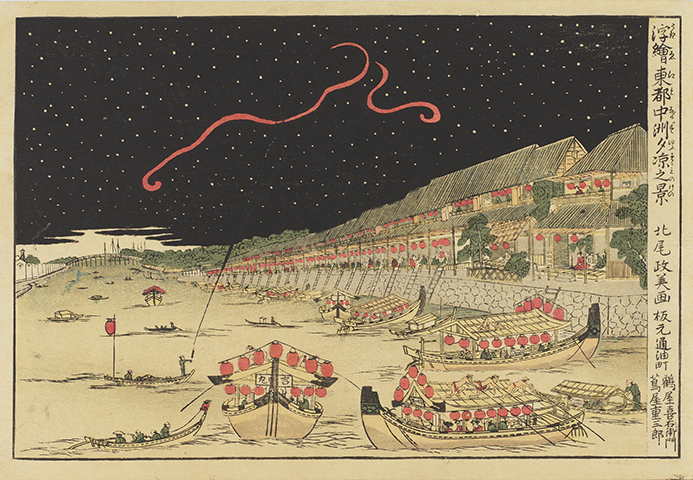
3. Little-Known Night-Scene Prints Beloved Abroad
In the late Meiji period, as domestic demand for traditional ukiyo-e declined, many prints were created specifically for overseas markets. These included reproductions of works by Hiroshige and Kiyochika, as well as new night scenes inspired by their works, demonstrating the high regard in which Edo-period night imagery was held abroad. However, night-scene prints made for export have received little attention in research and exhibitions to date. Highlighting the publishers Hasegawa Takejirō and Watanabe Shōzaburō, this exhibition introduces these overlooked night-scene prints created for international audiences, offering insight into the roots of ukiyo-e’s enduring global popularity.

Unless otherwise indicated, all works are from the Ota Memorial Museum of Art.
Admission
| Adult | 1200 yen |
| University and High school students | 800 yen |
| Junior High School Students and below (under 15 years old) | Free |
*Student ID required for junior high school students and above.
*¥100 discount with a disability ID (Valid for the holder and 1 caregiver).
*We accept cash only. No credit cards or mobile payments.
Calendar
■CLOSED
休館日
1-5,13,19,26
2026 / 10
1-5,13,19,26
| SUN | MON | TUE | WED | THU | FRI | SAT |
|---|
休館日
2,4-6,9,16,24,30
2026 / 11
2,4-6,9,16,24,30
| SUN | MON | TUE | WED | THU | FRI | SAT |
|---|
休館日
7-11,14,21,24-31
2026 / 12
7-11,14,21,24-31
| SUN | MON | TUE | WED | THU | FRI | SAT |
|---|
Torii Kotondo: Kabuki Paintings and Shin-Hanga (New Prints)

The Torii school played a central role in the production of Kabuki imagery, including theatrical signboard paintings, for approximately three centuries following the emergence of ukiyo-e. Torii Kotondo (1900–1976) was the eldest son of Torii Kiyotada VII, the seventh head of the Torii school. He later succeeded as its eighth head and became a prominent artist active from the Taishō through the Shōwa period.
Kotondo is said to have harbored a rebellious attitude toward the traditional profession of the Torii school in his youth. He first studied under Kobori Tomoto and later under Kaburaki Kiyokata, earning widespread acclaim for his bijin-ga (paintings of beautiful women), particularly those produced for the Taishō shin-hanga (new print) movement.
Kiyokata himself belonged to the artistic lineage of Utagawa Kuniyoshi, making Kotondo the only artist who may truly be regarded as the heir to the artistic traditions of both the Torii and Utagawa schools—the two great lineages of ukiyo-e.
Undeterred by the weighty responsibility of carrying on the Torii school tradition, Kotondo devoted himself wholeheartedly to Kabuki art, producing a vast number of theater signboards and stage designs. His hand-painted works depicting Kabuki themes likewise include many masterpieces.
The year 2026 marks the 50th anniversary of Kotondo’s death. This exhibition is the first major retrospective of his work since the museum’s exhibition in 2000. Featuring approximately 70 works, it offers a fresh perspective on Kotondo’s artistic career and invites visitors to rediscover the enduring appeal of his art.
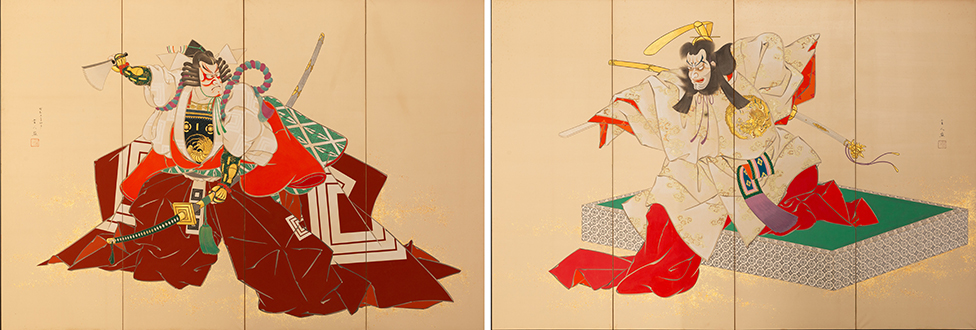
① The Torii School’s Specialty: Kabuki Paintings
In 1929, following the retirement of his father, Torii Kiyotada VII, Kotondo is believed to have succeeded as the eighth head of the Torii School. While balancing his personal interest in bijin-ga with the responsibilities of preserving the family tradition, he devoted himself to the production of kabuki-e (Kabuki prints). Combining tradition with a modern sensibility, he produced many outstanding kabuki-e. This section features his hand-painted kabuki-e together with rare theater signboards that were actually used.


②“Morning Hair,” Admired by Steve Jobs: Beauty Prints of the Taishō Era
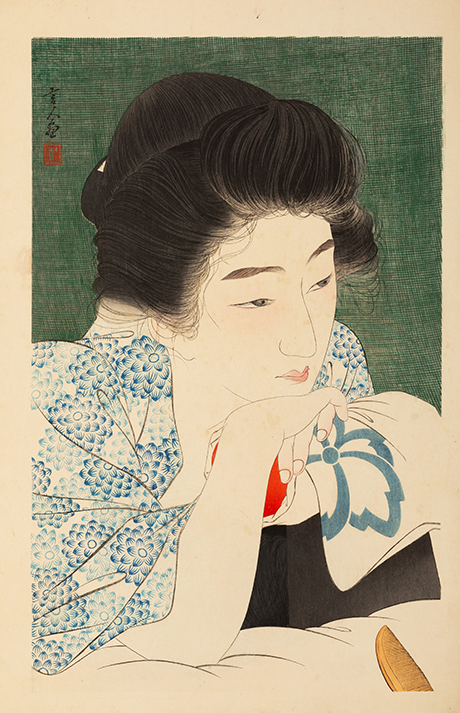
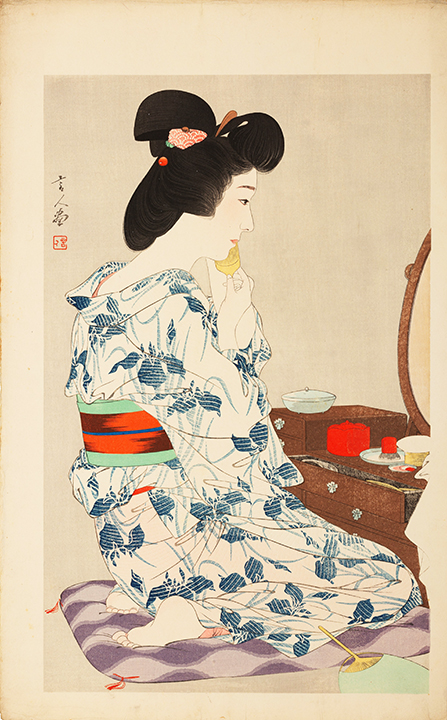
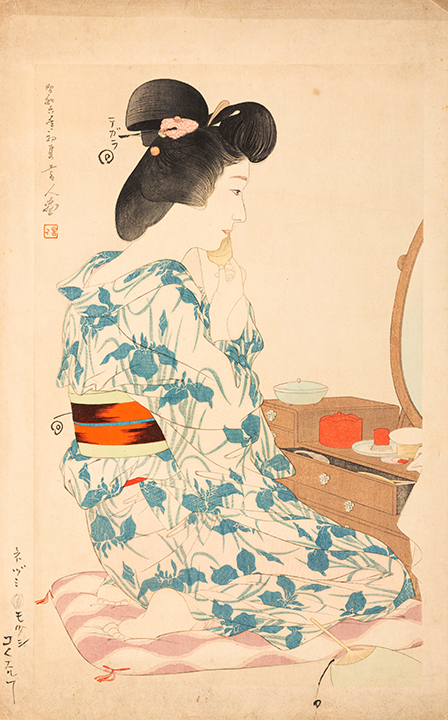
An essential aspect of Kotondo’s artistic career is represented by the bijin-ga (paintings of beautiful women) he created for the Taishō shin-hanga (new print) movement. These delicate portrayals of the beauty found in women’s everyday lives received widespread acclaim. Even today, Kotondo’s portraits of beautiful women continue to enjoy a unique popularity. This exhibition presents all 22 of Kotondo’s shin-hanga bijin-ga, including Morning Hair, which is said to have been confiscated by the Metropolitan Police Department under contemporary censorship regulations, as well as rare trial impressions.
③ Introducing “Verdant Rain” and Other Rare Hand-Painted Beauty Paintings
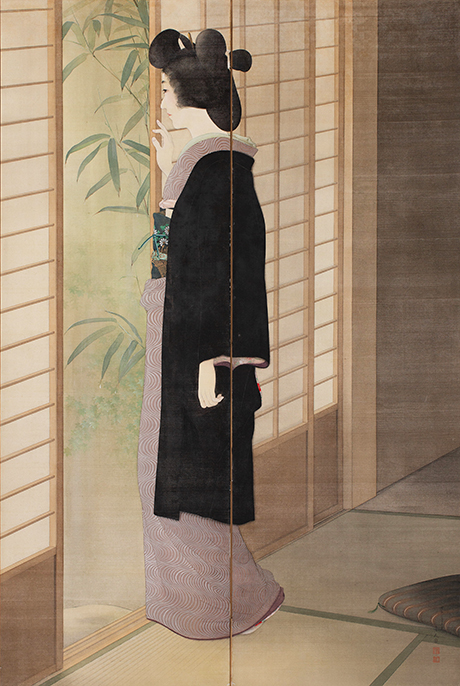
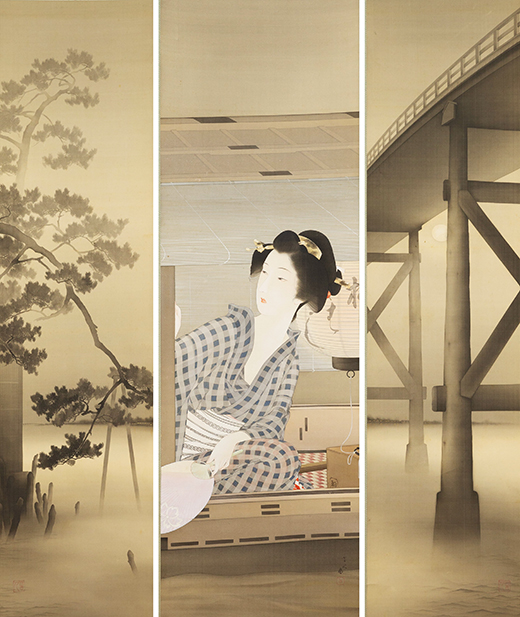
Torii Kotondo is believed to have begun studying bijin-ga (paintings of beautiful women) under Kaburaki Kiyokata at around the age of 20 or 21. A highlight of this exhibition is Verdant Rain, a masterpiece in the form of a folding screen, admired for its graceful figure and delicate coloring. Records indicate that it was exhibited at the Kyōdokai Exhibition in May 1928, making it an especially valuable work. The exhibition also features celebrated paintings such as the triptych Shubi-no-matsu Pine / Cooling Off by the Sumida River / Ryōgoku Bridge, which showcases Kotondo’s refined approach to hand-painted bijin-ga.
Admission
| Adult | 1200 yen |
| University and High school students | 800 yen |
| Junior High School Students and below (under 15 years old) | Free |
*Student ID required for junior high school students and above.
*¥100 discount with a disability ID (Valid for the holder and 1 caregiver).
*We accept cash only. No credit cards or mobile payments.
Calendar
■CLOSED
休館日
7,14,24,28-30
2026 / 09
7,14,24,28-30
| SUN | MON | TUE | WED | THU | FRI | SAT |
|---|
Animals & Monsters: Cute, Scary, and a Little Weird

2026, June 23rd-August 23rd
[1st Term] June 23rd-July 20th
[2nd Term] July 25th-August 23rd
Will be closed on June 29, July 6, 13, 21-24, 27, August 3, 10, 17.
※ Please note that weekends, public holidays, and the final days of the exhibition period tend to be very busy. If your schedule permits, we kindly ask that you visit on a weekday and as early in the exhibition period as possible. Thank you for your understanding and cooperation.
Opening Hours : 10:30 a.m. – 5:30 p.m. (Last Admission: 5:00 p.m.)
Admission : Adult ¥1200 / University and High school students ¥800 / Junior High School Students and below(under 15 years old) FREE
Various animals and monsters appear in ukiyo-e. From cats and dogs depicted as beloved pets to weird, terrifying demons and giant earth spiders, their portrayals are incredibly diverse. You will find anthropomorphized animals and even humorous, strangely shaped characters.
This exhibition showcases 140 works, ranging from popular pieces known for their charm and humor to newly acquired works shown for the first time (full rotation between terms). Explore the fascinating world of ukiyo-e through three keywords: “Cute,” “Scary,” and “A little weird.”

Highlight 1: Adorable Animals and Monsters
The world of ukiyo-e is filled with charming animals and monsters (yōkai). There are beloved cats and dogs, and even foxes and elephants that move with comical, human-like expressions.
Not all monsters are spine-chilling; some are surprisingly cute, like the Nekomata (mythical two-tailed monster cat), often depicted dancing with a hand towel on its head. Come and see an all-star lineup of popular animals and monsters!


Highlight 2: Anthropomorphized “Mimic” Animals
In ukiyo-e, animals like cats, rabbits, and octopuses—and even plants like Chinese lanterns and pumpkins—are transformed into lively, human-like figures. Cats are especially popular, often depicted relaxing at soba shop and eel eateries, and public baths. This exhibition features a full lineup of anthropomorphized characters from the Ota Memorial Museum of Art collection.


Highlight 3: “A little weird” Characters: What on Earth is this?
Ukiyo-e features more than just well-known animals and monsters. You’ll encounter a bizarre array of mysterious characters: the “Torako-ishi” (a mythical creature with a stone body and a tiger’s legs and tail), fish with human faces, and a single creature merging all twelve signs of the Chinese zodiac. Even abstract concepts like diseases, medicines, and money are transformed into human forms. This collection is full of the rich imagination of ukiyo-e artists.


Highlight 4: Nearly One-Fifth of the Exhibition on Display for the First
The Ota Memorial Museum of Art has hosted several exhibitions focused on animals and monsters in the past. This time, alongside our most popular masterpieces, we are showcasing a large number of works for the very first time. In fact, 27 out of the 140 pieces on display—nearly one-fifth of the entire exhibition—are new acquisitions. Even if you have seen our previous shows, there is plenty of new material for you to enjoy!


Admission
| Adult | 1200 yen |
| University and High school students | 800 yen |
| Junior High School Students and below (under 15 years old) | Free |
*Student ID required for junior high school students and above.
*¥100 discount with a disability ID (Valid for the holder and 1 caregiver).
*We accept cash only. No credit cards or mobile payments.
Calendar
■CLOSED
休館日
1,8,15-22,29
2026 / 06
1,8,15-22,29
| SUN | MON | TUE | WED | THU | FRI | SAT |
|---|
休館日
6,13,21-24,27
2026 / 07
6,13,21-24,27
| SUN | MON | TUE | WED | THU | FRI | SAT |
|---|
休館日
3,10,17,24-31
2026 / 08
3,10,17,24-31
| SUN | MON | TUE | WED | THU | FRI | SAT |
|---|
Utagawa Hiroshige “One Hundred Famous Views of Edo” -His Final Challenge

2026, April 15th-June 14th
[1st Term] April 15th-May 10th
[2nd Term] May 15th-June 14th
Will be closed on April 20, 27, May 7, 11-14, 18, 25, June 1, 8.
Opening Hours : 10:30 a.m. – 5:30 p.m. (Last Admission: 5:00 p.m.)
Admission : Adult ¥1200 / University and High school students ¥800 / Junior High School Students and below(under 15 years old) FREE
Utagawa Hiroshige (1797–1858), a master of ukiyo-e, transformed meisho-e (pictures of famous places) in the late Edo period. Throughout his career, he remained at the forefront of the genre. His celebrated series, One Hundred Famous Views of Edo, is widely regarded as a masterpiece that vividly captures the spirit of the city.
Hiroshige devoted the final three years of his life (aged 60–62) to this ambitious series. Several prints were published after his death, and the series is the culminating achievement of his career and his most extensive project, comprising his largest body of prints.
The works are notable for their bold and unconventional compositions, employing striking perspectives rarely seen in earlier landscape prints. Depicting over one hundred sites in Edo, Hiroshige identified and introduced “new” famous places that had previously received little attention, while also incorporating elements of contemporary life and popular culture. In this sense, the series represents a highly inventive and experimental undertaking in the artist’s later years. Presented here for the first time in approximately 8 years, the complete set of 120 prints from the series is shown in 2 terms. We invite you to explore the remarkable artistic achievements that Hiroshige attained in his final years and to experience the enduring appeal of these works.


①A final masterpiece: The art of exquisite carving and printing
Created by the artist between the ages of 60 and 62, One Hundred Famous Views of Edo represents Hiroshige’s final artistic testament, with several prints published posthumously. The exhibition is divided into 2 terms to showcase the complete set of 120 works: 118 designs by Hiroshige, 1 by Hiroshige II, and the series index. Our museum’s collection is renowned for its exceptional preservation and the vibrant beauty of its early-edition carving and printing, offering a rare opportunity to experience the full brilliance of this masterpiece.


② Innovation in landscape art: The challenge of bold composition
One of the most striking features of this series is the “foreground-dominant” style (kinzō-gata kōzu), in which a large motif is placed prominently in the immediate foreground. Hiroshige also utilized dramatic cropping and bird’s-eye perspectives to create innovative, highly graphic compositions. This series exerted a profound influence on Western art and remains pivotal in redefining landscape art worldwide.


③ Capturing the “now” of Edo: Discovering new landmarks and social trends
Hiroshige introduced numerous innovations beyond just composition. Expanding his vision from the city center to the suburbs—including scenic areas such as Ōji and Meguro—he actively redefined and popularized new “famous views.”
He also keenly captured the turbulent social conditions of the late Edo period. For instance, he depicted how Mt. Goten was carved away to provide soil for constructing coastal artillery batteries (Odaiba) following the arrival of the “Black Ships.”
These works demonstrate Hiroshige’s diverse innovations—particularly how he redefined the landscape genre by weaving the pulse of the era into his art.


Admission
| Adult | 1200 yen |
| University and High school students | 800 yen |
| Junior High School Students and below (under 15 years old) | Free |
*Student ID required for junior high school students and above.
*¥100 discount with a disability ID (Valid for the holder and 1 caregiver).
*We accept cash only. No credit cards or mobile payments.
Calendar
■CLOSED
休館日
1-14,20,27
2026 / 04
1-14,20,27
| SUN | MON | TUE | WED | THU | FRI | SAT |
|---|
休館日
7,11-14,18,25
2026 / 05
7,11-14,18,25
| SUN | MON | TUE | WED | THU | FRI | SAT |
|---|
休館日
1,8,15-22,29
2026 / 06
1,8,15-22,29
| SUN | MON | TUE | WED | THU | FRI | SAT |
|---|