Torii Kotondo: Kabuki Paintings and Shin-Hanga (New Prints)

The Torii school played a central role in the production of Kabuki imagery, including theatrical signboard paintings, for approximately three centuries following the emergence of ukiyo-e. Torii Kotondo (1900–1976) was the eldest son of Torii Kiyotada VII, the seventh head of the Torii school. He later succeeded as its eighth head and became a prominent artist active from the Taishō through the Shōwa period.
Kotondo is said to have harbored a rebellious attitude toward the traditional profession of the Torii school in his youth. He first studied under Kobori Tomoto and later under Kaburaki Kiyokata, earning widespread acclaim for his bijin-ga (paintings of beautiful women), particularly those produced for the Taishō shin-hanga (new print) movement.
Kiyokata himself belonged to the artistic lineage of Utagawa Kuniyoshi, making Kotondo the only artist who may truly be regarded as the heir to the artistic traditions of both the Torii and Utagawa schools—the two great lineages of ukiyo-e.
Undeterred by the weighty responsibility of carrying on the Torii school tradition, Kotondo devoted himself wholeheartedly to Kabuki art, producing a vast number of theater signboards and stage designs. His hand-painted works depicting Kabuki themes likewise include many masterpieces.
The year 2026 marks the 50th anniversary of Kotondo’s death. This exhibition is the first major retrospective of his work since the museum’s exhibition in 2000. Featuring approximately 70 works, it offers a fresh perspective on Kotondo’s artistic career and invites visitors to rediscover the enduring appeal of his art.
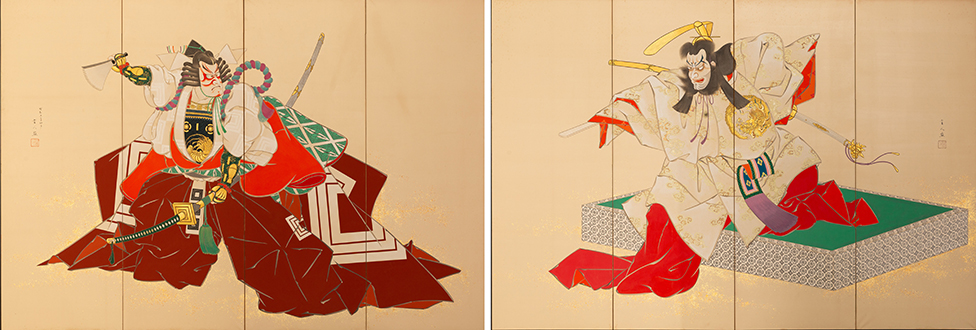
① The Torii School’s Specialty: Kabuki Paintings
In 1929, following the retirement of his father, Torii Kiyotada VII, Kotondo is believed to have succeeded as the eighth head of the Torii School. While balancing his personal interest in bijin-ga with the responsibilities of preserving the family tradition, he devoted himself to the production of kabuki-e (Kabuki prints). Combining tradition with a modern sensibility, he produced many outstanding kabuki-e. This section features his hand-painted kabuki-e together with rare theater signboards that were actually used.


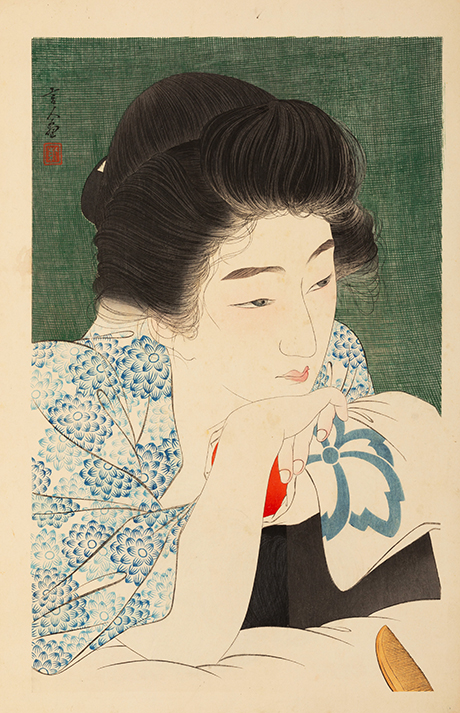
②“Morning Hair,” Admired by Steve Jobs: Beauty Prints of the Taishō Era
An essential aspect of Kotondo’s artistic career is represented by the bijin-ga (paintings of beautiful women) he created for the Taishō shin-hanga (new print) movement. These delicate portrayals of the beauty found in women’s everyday lives received widespread acclaim. Even today, Kotondo’s portraits of beautiful women continue to enjoy a unique popularity. This exhibition presents all 22 of Kotondo’s shin-hanga bijin-ga, including Morning Hair, which is said to have been confiscated by the Metropolitan Police Department under contemporary censorship regulations, as well as rare trial impressions.
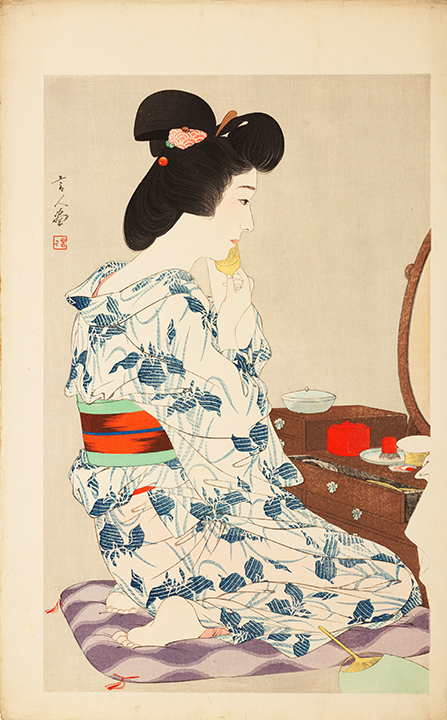
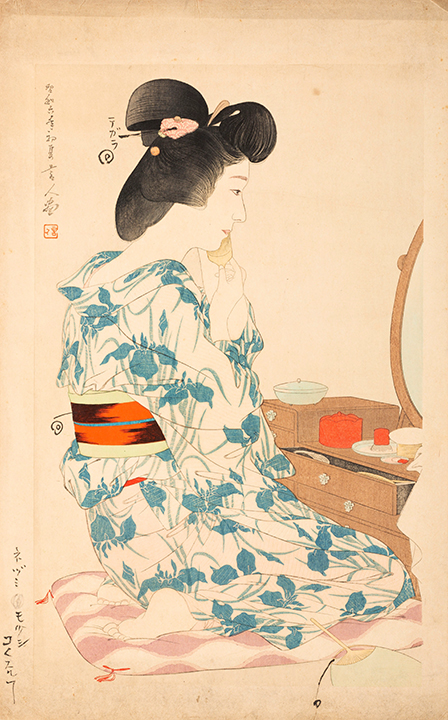
③ Introducing “Verdant Rain” and Other Rare Hand-Painted Beauty Paintings
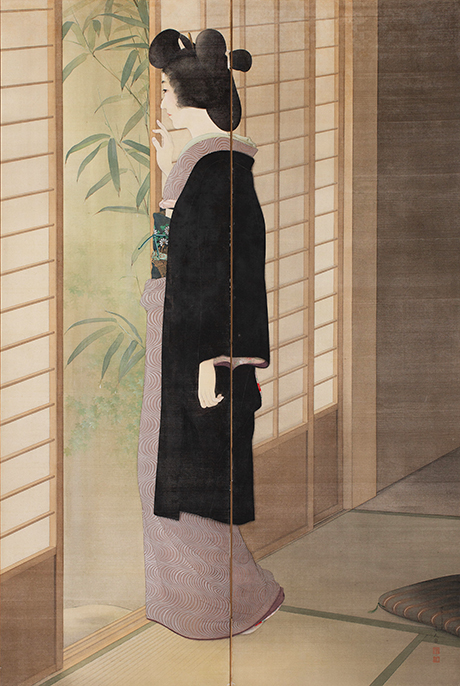
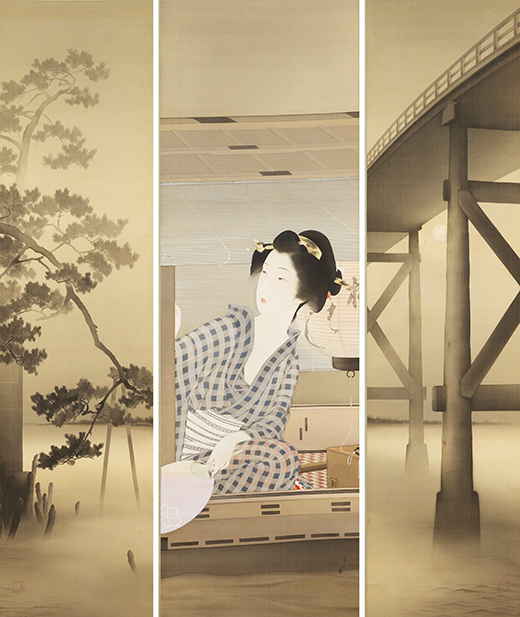
Torii Kotondo is believed to have begun studying bijin-ga (paintings of beautiful women) under Kaburaki Kiyokata at around the age of 20 or 21. A highlight of this exhibition is Verdant Rain, a masterpiece in the form of a folding screen, admired for its graceful figure and delicate coloring. Records indicate that it was exhibited at the Kyōdokai Exhibition in May 1928, making it an especially valuable work. The exhibition also features celebrated paintings such as the triptych Shubi-no-matsu Pine / Cooling Off by the Sumida River / Ryōgoku Bridge, which showcases Kotondo’s refined approach to hand-painted bijin-ga.
Admission
| Adult | 1200 yen |
| University and High school students | 800 yen |
| Junior High School Students and below (under 15 years old) | Free |
*Student ID required for junior high school students and above.
*¥100 discount with a disability ID (Valid for the holder and 1 caregiver).
*We accept cash only. No credit cards or mobile payments.
Calendar
■CLOSED
休館日
7,14,24,28-30
2026 / 09
7,14,24,28-30
| SUN | MON | TUE | WED | THU | FRI | SAT |
|---|