Masterpieces of ukiyo-e paintings from Ota Memorial Museum of Art
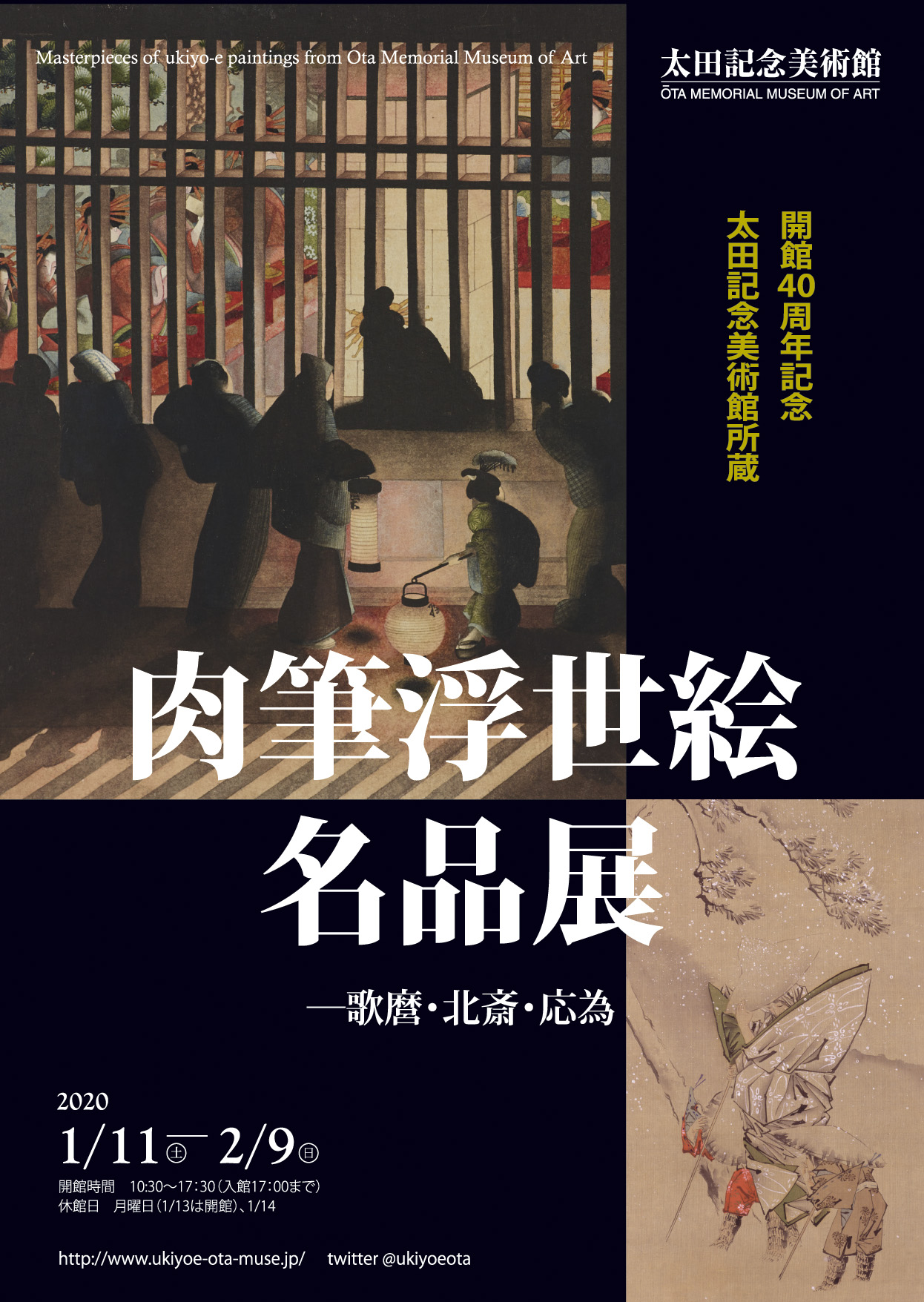
Ōta Memorial Museum of Art located in Harajuku specializes in ukiyo-e. The museum has a collection of about 14000 pieces that were mainly collected by Seizō ŌtaⅤ(1893~1977), who was the former president of the Toho Mutual Life Insurance Company, throughout his lifetime. Since the museum in Harajuku opened in January 1980, it has continued to be active as one of the few museums specializing in ukiyo-e in Tokyo, and celebrates its 40th anniversary this January. Commemorating this, we will exhibit selected nikuhitsu-ga (hand-painted pictures) from our wide-range of collections in this exhibition. Compared to ukiyo-e woodblock prints which are made by the combined labor of painters, carvers and printers, nikuhitsu-ga are drawn by the artist. We can see the artists’ brush strokes and understand their techniques from nikuhitsu-ga. Started from Hishikawa Moronobu, the ukiyo-e artist of the early period, we will introduce the masterpieces of famous artists such as Kitagawa Utamaro, Katsushika Hokusai and Utagawa Hiroshige, and Kobayashi Kiyochika and Tsukioka Yoshitoshi who were artists active in the Meiji Era. We would also like to you to enjoy the competition of the genius father and daughter Katsushika Hokusai and Katsusika Ōi’s works: “Tiger in the Rain” painted by Hokusai in the year of his death at the age of 90, and “Courtesans Displaying Themselves through the Lattice in Yoshiwara” painted by Ōi, whose total number of confirmed works worldwide is only about 10 pieces.
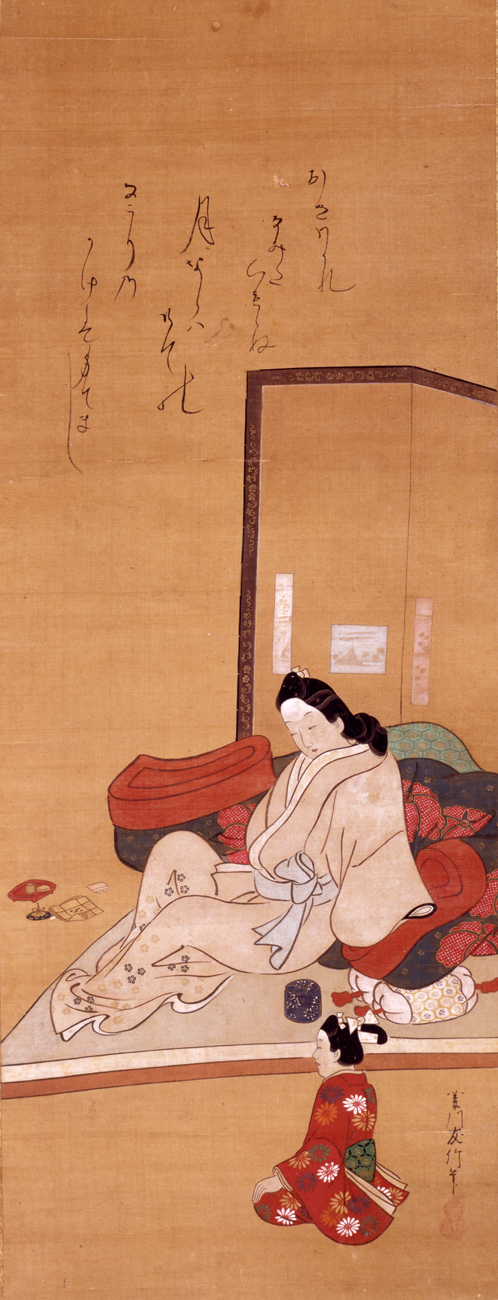
Hishikawa Moronobu “Courtesan Being in a Pensive Mood”
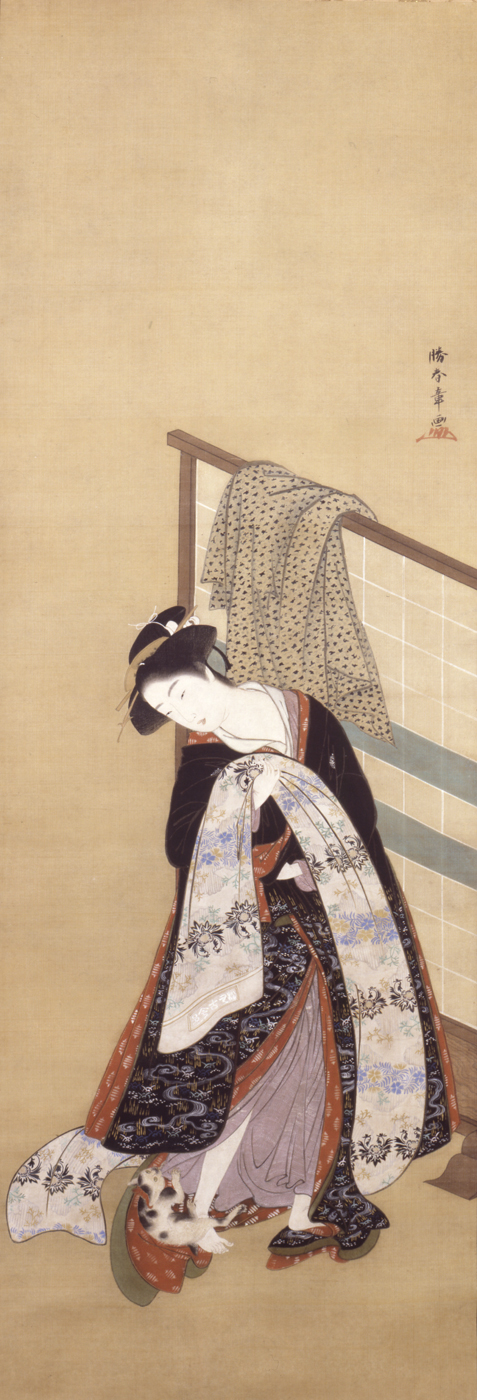
Katsukawa Shunshō “Kitten and a Woman”
Marking the 40th anniversary of Ōta Memorial Museum of Art
Late Seizō Ōta Ⅴ had learnt that ukiyo-e was highly valued overseas while traveling to Western countries, and started to collect ukiyo-e after being fascinated by the kachō-ga (flower-and-bird paintings) of Katsushika Hokusai exhibited at The Art Institute of Chicago. The size of the collection he made throughout his life reached about 12,000 works, and the Ōta Memorial Museum of Art was opened after his death by his bereaved family on January 13th, 1980. Ōta Memorial Museum of Art is one of the few museums specializing in ukiyo-e in Tokyo and has been holding exhibitions on various themes and promoting the appeal of ukiyo-e; we will mark the 40th anniversary of the opening of the museum this January, 2020.
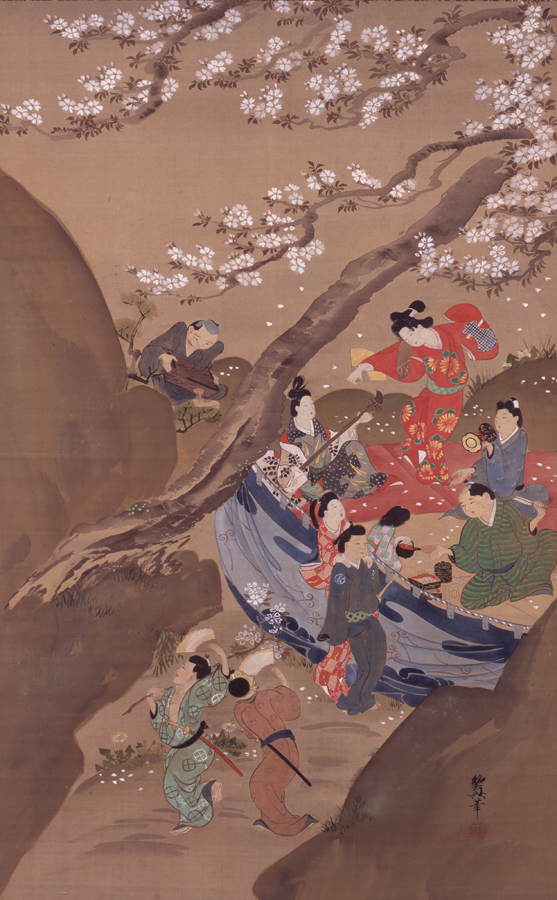
Kuwagata Keisai “Cherry Blossom Viewing Party”
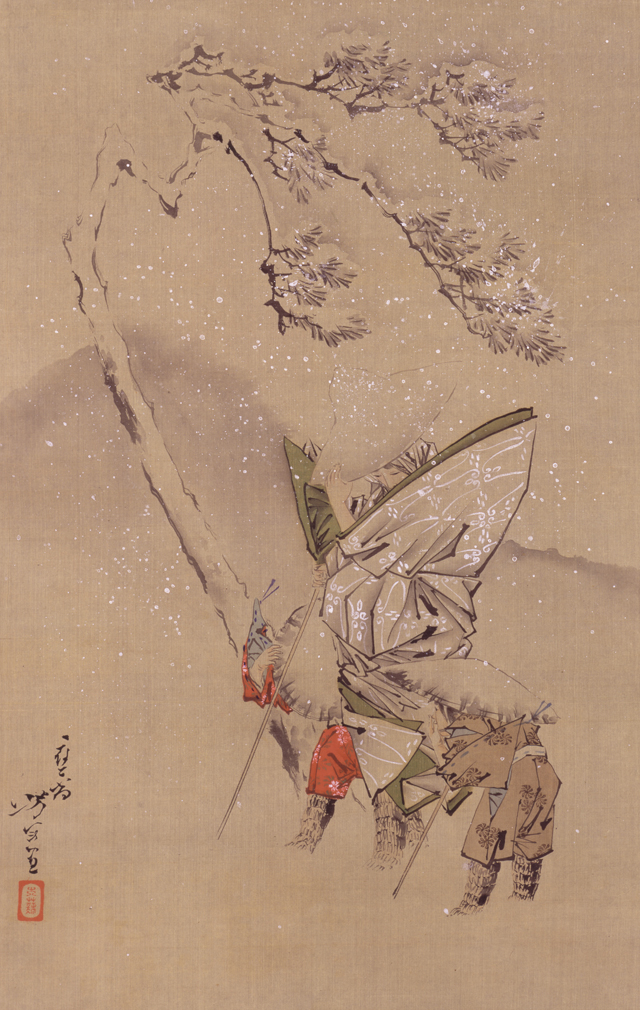
Tsukioka Yoshitoshi “Lady Tokiwa and Her Children Wandering in the Snow”
A fine collection of precious masterpieces by successive generations of ukiyo-e artists
The collection at Ōta Memorial Museum of Art is known as a well-balanced collection, consisting of both woodblock prints and hand-painted ukiyo-e, from various artists and periods. We carefully selected only the famous hand-painted works for this exhibition. Starting from Hishikawa Moronobu, a succession of exhibits will follow – Kaigetsudō School, Miyagawa School, Katsushika School such as Torii Kiyonaga, Kitagawa Utamaro, Katsushika Hokusai and Ōi, Utagawa School such as Utagawa Toyoharu, Toyokuni, Kuniyoshi and Hiroshige, and Kobayashi Kiyochika and Tsukioka Yoshitoshi who were active during the Meiji period. Please enjoy the fine hand-painted works by famous artists that illuminate the long history of ukiyo-e.
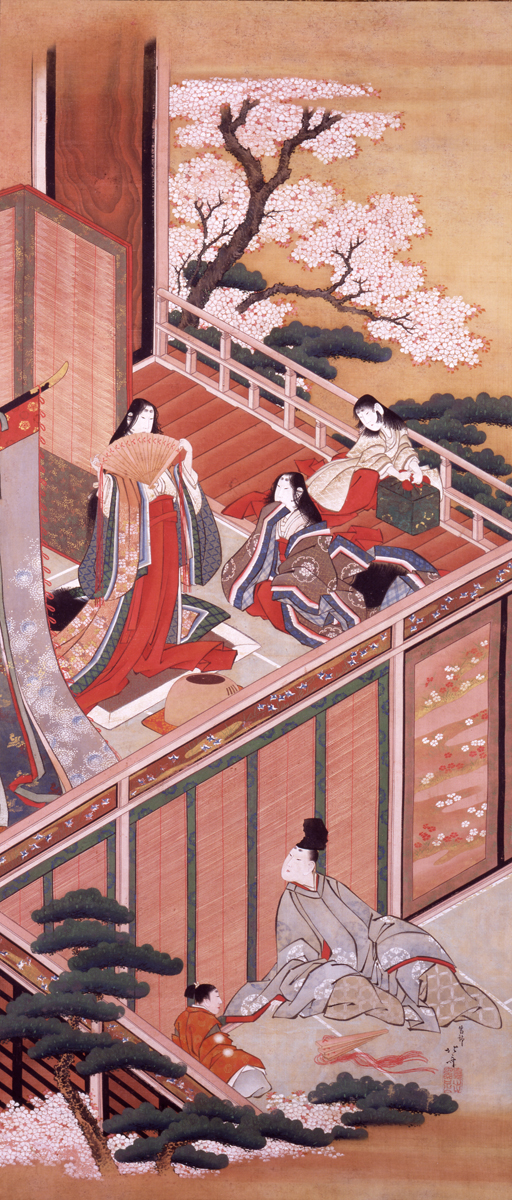
Katsushika Hokusai “The Tale of Genji, Scene of Hanano-en Chapter”
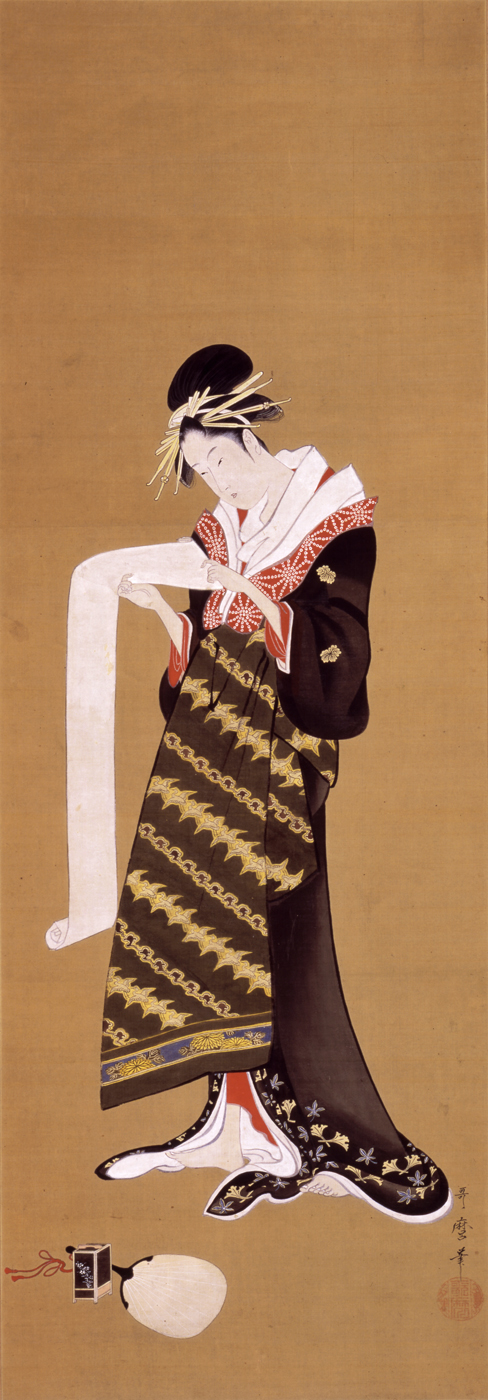
Utagawa Hiroshige Kitagawa Utamaro “Courtesan Reading a Letter”
The actual brushwork of ukiyo-e artists seen in the nikuhistu-ga masterpieces
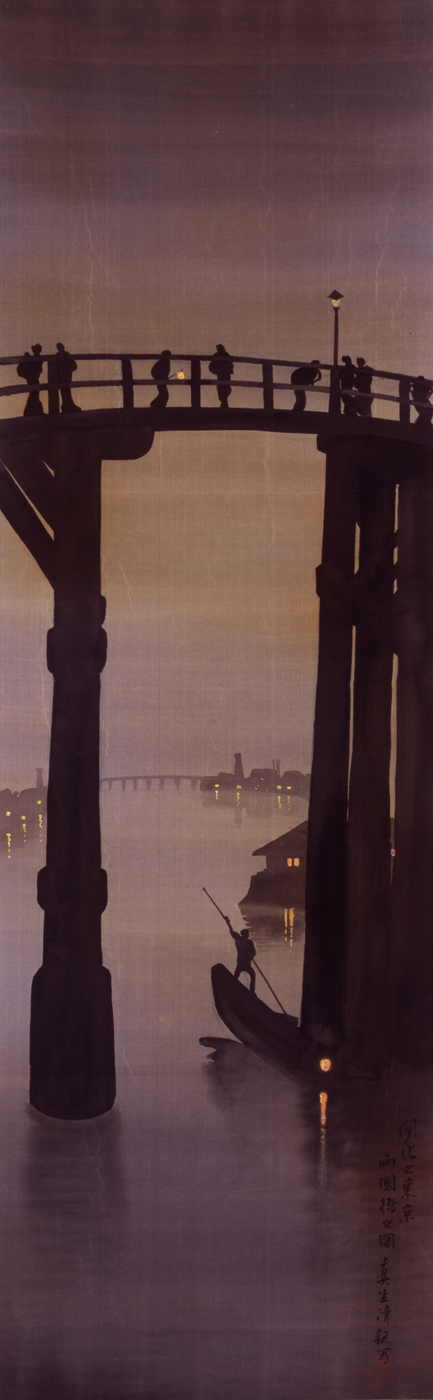
Kobayashi Kiyochika “Ryōgoku-bashi Bridge in Civilized Tokyo”
Most ukiyo-e works are made using the woodblock print method by the skills of artists who draw the sketches, carvers and painters. Since the sketches by the artists get carved into the woodblocks by the carvers and are lost, there is no way for us to see the original brushwork of the artists. Compared to this, hand-painted ukiyo-e (nikuhitsu-ga) is the only kind of work for which the artist receives an order and draws directly on paper or silk. We are able to see the original skills of ukiyo-e artists such as the delicate curves and color gradation, and also can enjoy the beauty of the richly utilized inks.
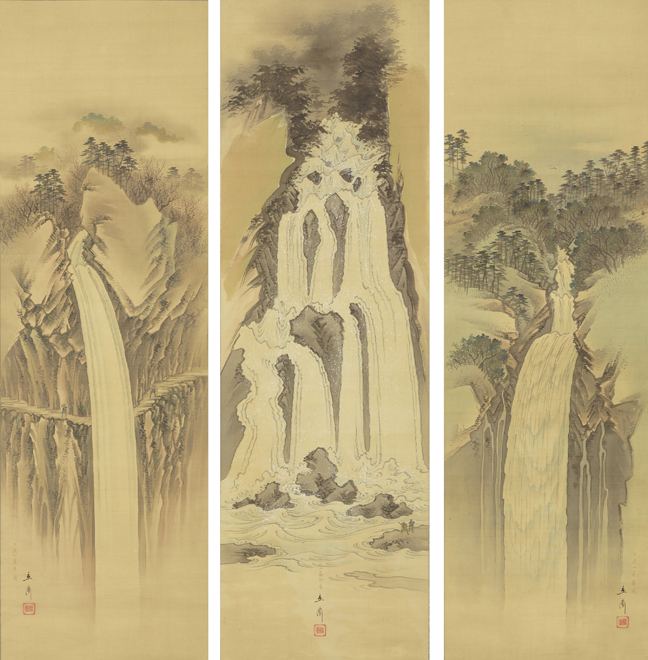
Utagawa Hiroshige “Kegon Falls in Nikkō” “Kirifuri Falls in Nikkō” “Urami Falls in Nikkō”
Featured work
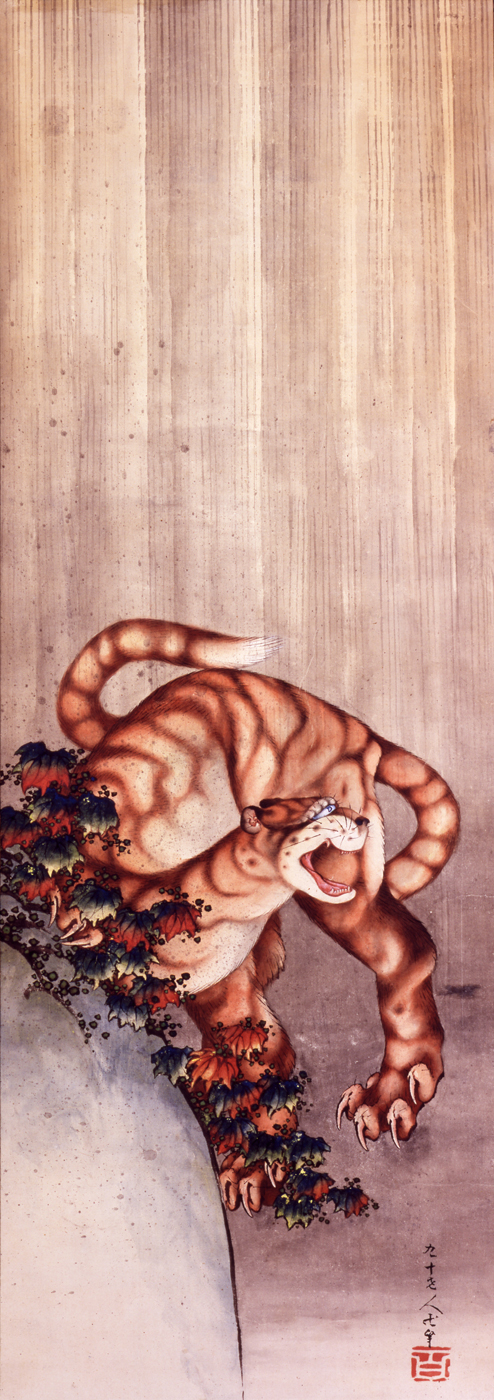
Katsushika Hokusai “Tiger in the Rain”
Katsushika Hokusai “Tiger in the Rain”
Katsushika Ōi “Courtesans Displaying Themselves through the Lattice in Yoshiwara”
Father and the daughter – Competition of two genius artists
In this exhibition, two of the most famous works at Ōta Memorial Museum of Art, “Tiger in the Rain” by Katsushika Hokusai and “Courtesans Displaying Themselves through the Lattice in Yoshiwara” by Katsushika Ōi will be on display together. “Tiger in the Rain” by Katsushika Hokusai is a masterpiece drawn in 1849, the year of Hokusai’s death. The powerful vitality of the tiger staring up at the sky in the rain, seems to symbolize the unflagging soul of Hokusai as an artist at the age of 90. It is also known as the masterpiece that in 2005 was found to be paired up with “Dragon” housed at Guimet Museum in France. Also, the work by the daughter of Hokusai, Katsushika Ōi. “Courtesans Displaying Themselves through the Lattice in Yoshiwara”, which will be on display for the first time in two years, is known as one of the representative pieces of the rare works by Ōi. It dramatically depicts the pleasure quarters of Edo and the night in Yoshiwara by the bold depiction of the light and shadows, and the figures of people emerging in the dark give it a dreamy atmosphere. There is a story that Hokusai said he was no match for Ōi at drawing pictures of beautiful women, and her extraordinary talent is clearly shown in this picture.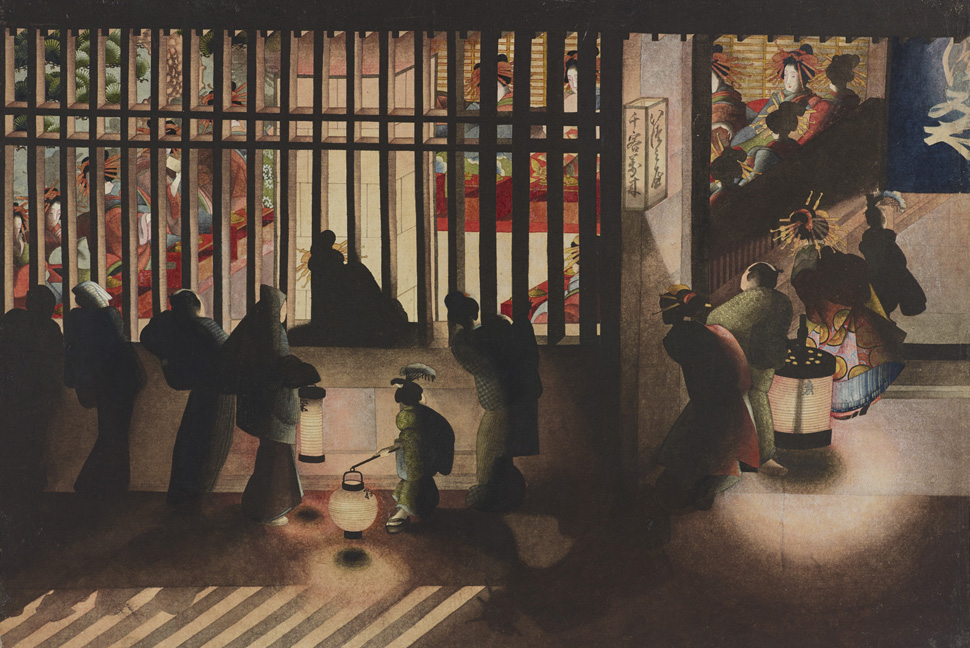
Katsushika Ōi “Courtesans Displaying Themselves through the Lattice in Yoshiwara”
Admission
| Adult | 700 yen |
|---|---|
| University and High school students | 500 yen |
| Junior High School Students and below | Free |
Calendar
-
-
-
-
2020 January
SUN MON TUE WED THU FRI SAT 1 2 3 4 5 6 7 8 9 10 11 12 13 14 15 16 17 18 19 20 21 22 23 24 25 26 27 28 29 30 31 -
2020 February
SUN MON TUE WED THU FRI SAT 1 2 3 4 5 6 7 8 9 10 11 12 13 14 15 16 17 18 19 20 21 22 23 24 25 26 27 28 29
-
-
-
鏑木清方と鰭崎英朋 近代文学を彩る口絵 ―朝日智雄コレクション
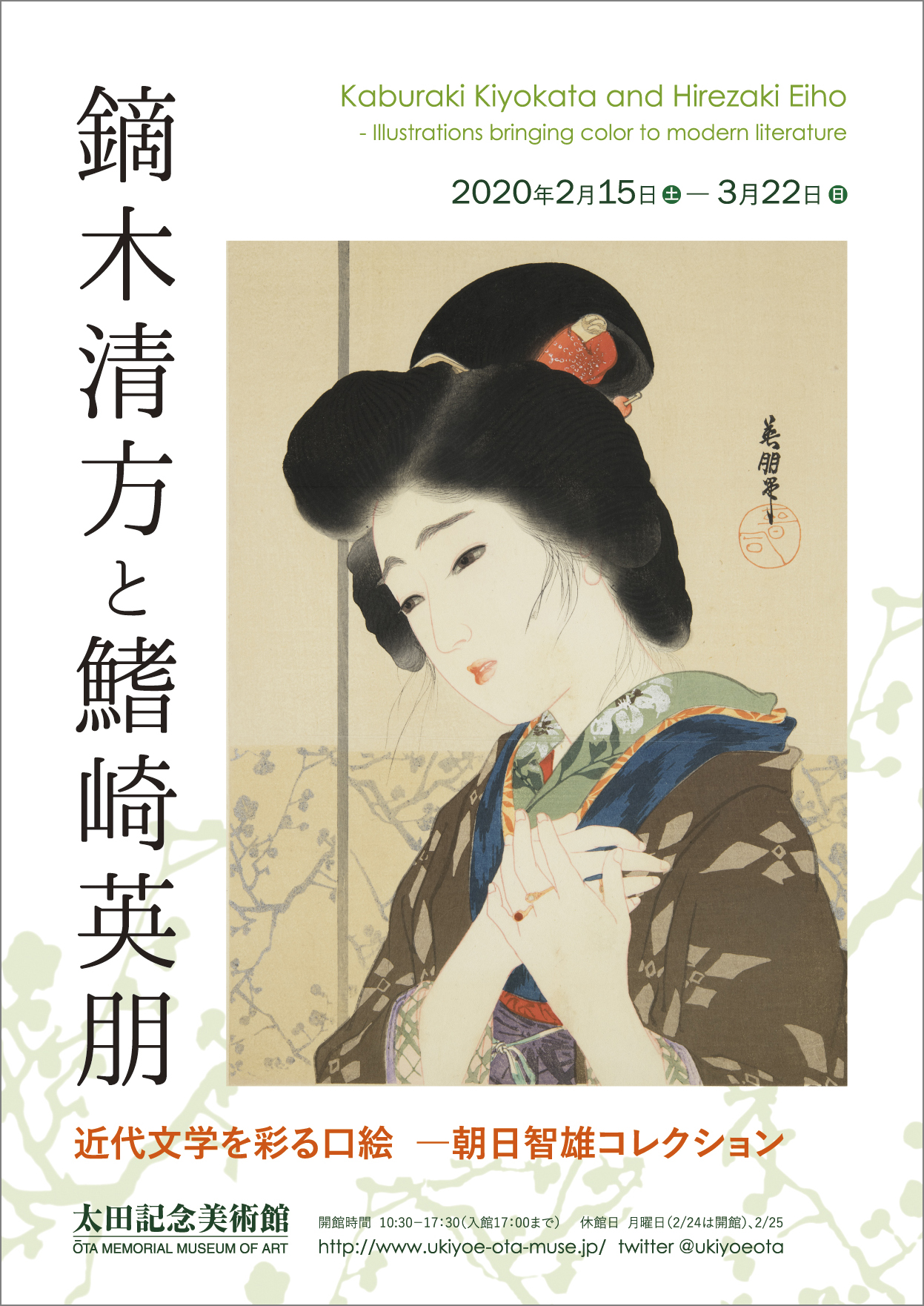
知られざるライバル―鏑木清方(かぶらき・きよかた)と鰭崎英朋(ひれざき・えいほう)
2019年、「築地明石町」が再発見されたことが話題となった鏑木清方(1878~1972)。日本画家として今でも広く知られていますが、明治30年代後半から大正5年頃にかけては、文芸雑誌や小説の単行本の口絵というジャンルで活躍していました。その時、清方と人気の双璧をなしていたのが、鰭崎英朋(1881~1968)です。清方と英朋は、月岡芳年の系譜に連なると共に、烏合会という美術団体に属した友人同士でもありました。清方と英朋による、明治の美しい女性たちを描いた口絵の名品を紹介します。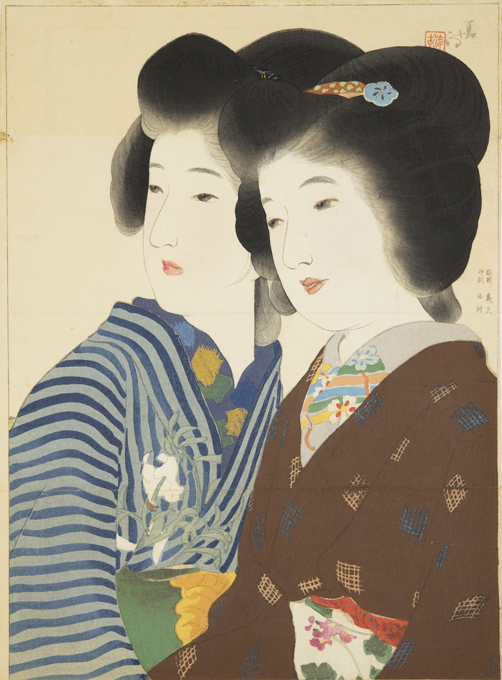
鏑木清方 菊池幽芳・著『百合子 後編』口絵 大正2年(1913) ⒸAkio Nemoto
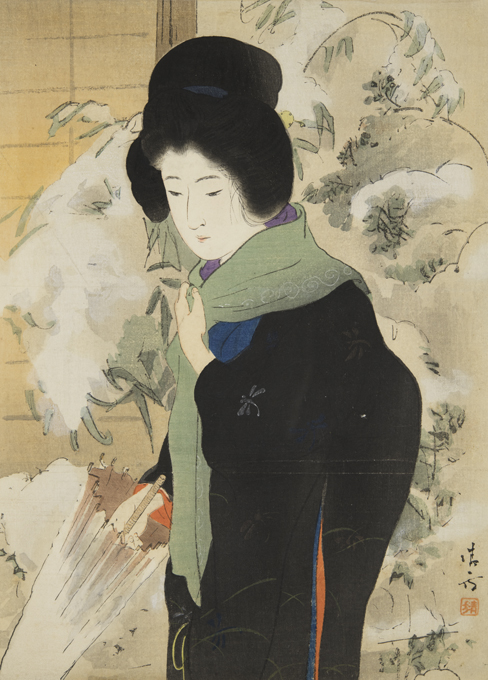
鏑木清方 菊池幽芳・著『小ゆき 後編』口絵 大正2年(1913) ⒸAkio Nemoto
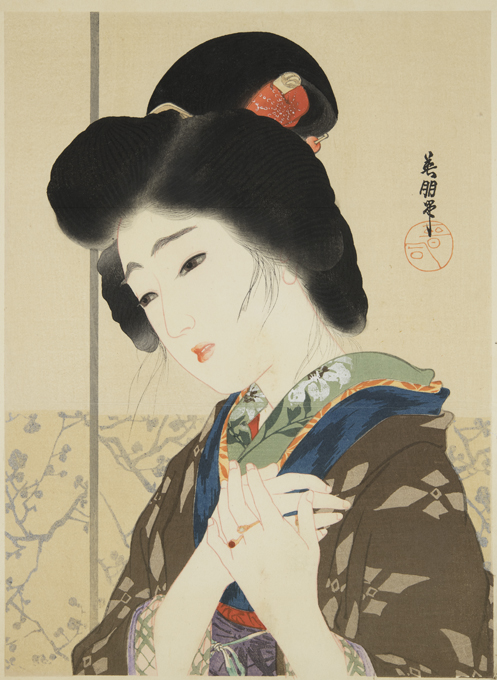
鰭崎英朋 柳川春葉・著『誓 前編』口絵 大正4年(1915)
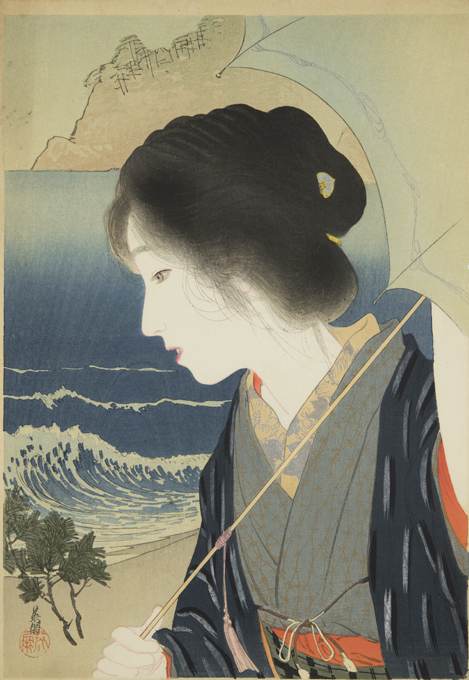
鰭崎英朋 柳川春葉・著『誓 中編』口絵 大正6年(1917)
知られざる超絶技巧の木版画
明治20年代後半から大正初期にかけて、文芸雑誌や小説の単行本の巻頭には、木版による口絵が付されました。物語の世界を華やかに彩る木版口絵は、江戸時代から続く浮世絵版画の系譜に連なるだけでなく、江戸の技術を遥かに上回る精緻な彫りや摺りが施されています。しかしながら、現在の浮世絵研究ではほとんど顧みられることがなく、忘れられたジャンルとなってしまいました。木版口絵のコレクターである朝日智雄氏の所蔵品の中から約110点を厳選し、歴史に埋もれた口絵の美しさにスポットをあてます。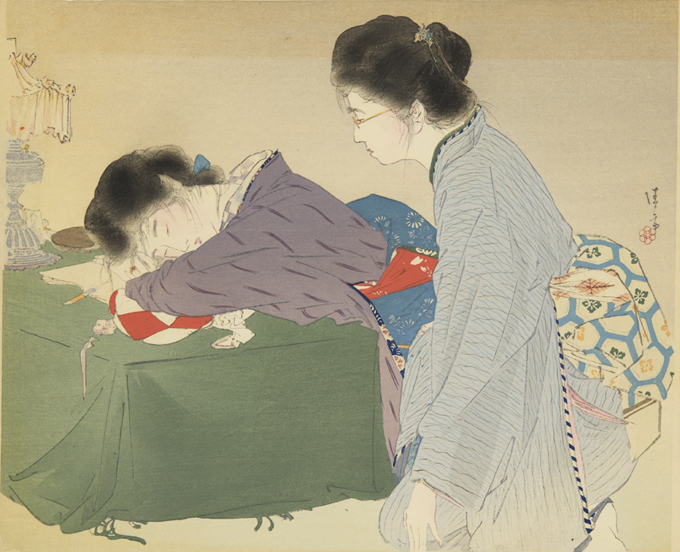
鏑木清方 小杉天外・著『にせ紫 後編』口絵 明治38年(1905) ⒸAkio Nemoto
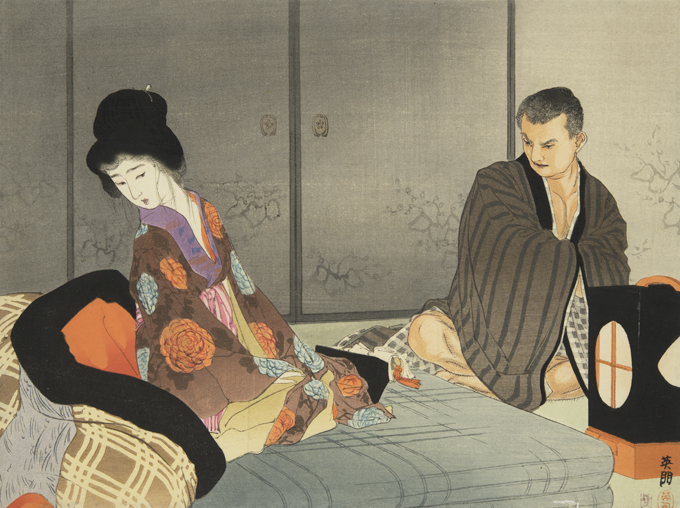
鰭崎英朋 泉斜汀・著『深川染 前編』口絵 明治40年(1907)
知られざる挿絵画家たち―桂舟、永洗、年方、半古
文芸雑誌や小説の単行本の巻頭に付された口絵は、明治20年代後半頃から、さまざまな絵師たちによって手掛けられ、その人数は100人以上におよびます。清方や英朋が登場する以前、人気を誇っていた絵師を挙げるとするならば、武内桂舟(1861~1943)、富岡永洗(1864~1905)、水野年方(1866~1908)、梶田半古(1870~1917)でしょう。中でも、水野年方は鏑木清方の師匠であり、清方の画業を考える上で欠かすことのできない人物です。清方や英朋と共に、4人の知られざる挿絵画家たちについてご紹介します。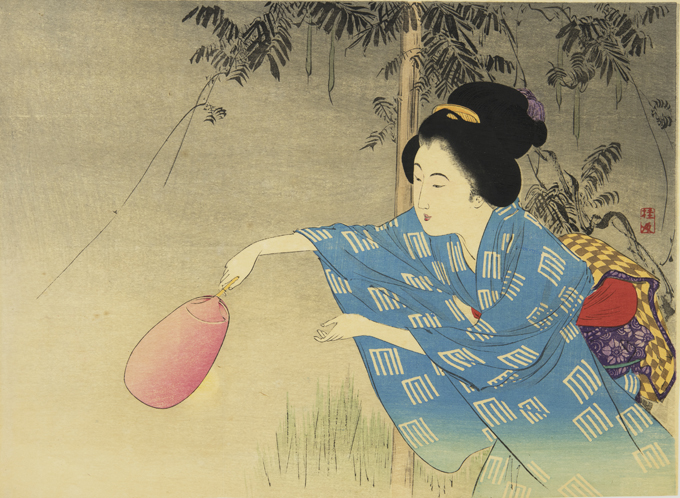
武内桂舟 「美人撲蛍」(『文芸倶楽部』第3巻10編口絵) 明治30年(1897)
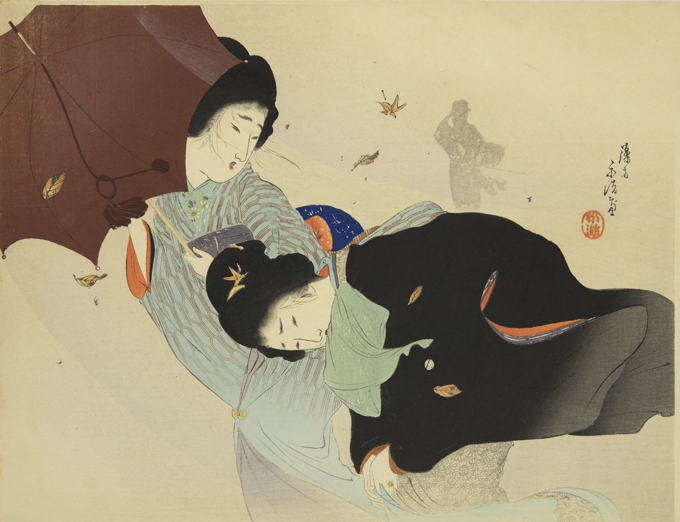
富岡永洗 水谷不倒・著『枯野の真葛』口絵 明治30年(1897)
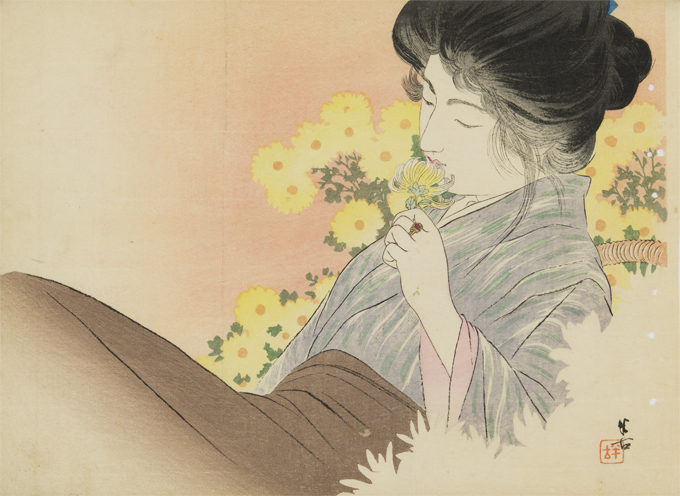
梶田半古 「菊のかをり」(『文芸倶楽部』第11巻第13号口絵) 明治38年(1905)
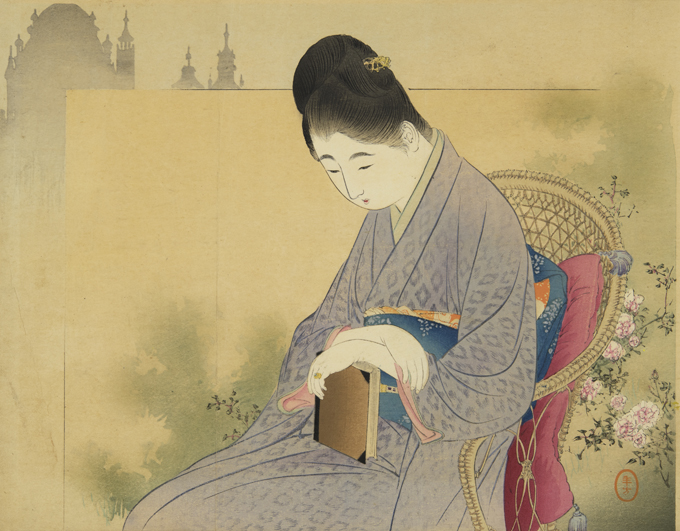
水野年方 村上浪六・著『当世五人男のうち 倉橋幸蔵 続編』口絵 明治35年(1902)
見どころの作品
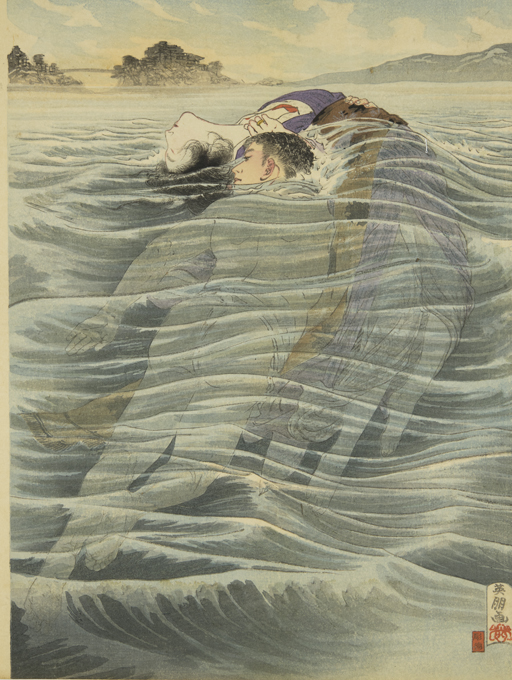
鰭崎英朋 泉鏡花・著『続風流線』口絵 明治38年(1905)
連携企画展
本展の半券を弥生美術館にてご提示いただくと下記展覧会を100円割引でご覧いただけます。また、下記展覧会の半券を当館でご提示いただくと、本展を100円割引でご覧いただけます。半券1枚につき1名様1回限り有効。他割引との併用不可。もうひとつの歌川派?! 国芳・芳年・年英・英朋・朋世~浮世絵から挿絵へ…… 歌川派を継承した誇り高き絵師たち
- 会場 弥生美術館(東京都文京区弥生2-4-3)
- 会期 2020年1月7日(火)~3月29日(日)
- 入館料 一般900円 大・高生800円 中・小生400円
- http://www.yayoi-yumeji-museum.jp/
- 問合せ 03-3812-0012
入館料
| 一般 | 1000円 |
|---|---|
| 大高生 | 700円 |
| 中学生以下 | 無料 |
- *中学生以上の学生は学生証をご提示下さい。
- *団体(10名以上)は1名さまあたり100円引き。 (一括にてお支払い願います。事前のお申し込みにご協力ください。)
- *障害者手帳提示でご本人とお付き添い1名さま100円引き。
- *その他各種割引についてはお問い合わせください。
- *料金は消費税込み。
開館日カレンダー
-
-
-
-
2020年2月
SUN MON TUE WED THU FRI SAT 1 2 3 4 5 6 7 8 9 10 11 12 13 14 15 16 17 18 19 20 21 22 23 24 25 26 27 28 29 -
2020年3月
SUN MON TUE WED THU FRI SAT 1 2 3 4 5 6 7 8 9 10 11 12 13 14 15 16 17 18 19 20 21 22 23 24 25 26 27 28 29 30 31
-
-
-
開館40周年記念 太田記念美術館所蔵 肉筆浮世絵名品展 ―歌麿・北斎・応為
原宿にある浮世絵専門の美術館・太田記念美術館は、かつて東邦生命相互保険会社の社長を務めた五代太田清藏(1893~1977)が生涯に渡って蒐集した浮世絵を中心とする、約14000点のコレクションを所蔵しています。当館は昭和55年(1980)1月に原宿でオープンして以来、都内でも数少ない浮世絵専門美術館として活動を続け、2020年1月に開館40周年を迎えます。
本展では開館40周年を記念して、当館の幅広い所蔵の中から、肉筆画の名品を選りすぐって公開いたします。絵師が下絵を描き、彫師、摺師との分業によって生み出される浮世絵版画と比べ、肉筆画は絵師がその完成まで手作業で仕上げる一点物。肉筆画からは、絵師たちの生の筆致やその技量をうかがい知ることができるのです。
初期浮世絵の菱川師宣からはじまり、鳥居清長や喜多川歌麿、葛飾北斎、歌川広重といった有名絵師たち、明治時代に活躍した小林清親、月岡芳年まで、長い浮世絵の歴史を彩る、肉筆画の名品が勢揃いいたします。葛飾北斎の娘であり、近年注目を集めている葛飾応為の名品「吉原格子先之図」が約2年ぶりに公開されるのにも注目です。
菱川師宣「遊女物思いの図」
勝川春章「子猫に美人図」
開館40周年を迎える太田記念美術館
五代太田清藏は欧米を旅行中に、浮世絵が海外で高く評価されていることを知り、シカゴ美術館で展示されていた葛飾北斎の花鳥画に魅了され蒐集をはじめます。生涯で集めたコレクションは約12,000点に上り、その死後、遺族の手により昭和55年(1980)1月13日に太田記念美術館が開館しました。
都内でも数少ない浮世絵の専門美術館として、さまざまなテーマで展覧会の開催し、浮世絵の魅力を発信し続けてきた当館は、2020年1月に開館40周年を迎えます。
鍬形蕙斎「桜花遊宴図」
月岡芳年「雪中常盤御前図」
歴代の浮世絵師たちによる、珠玉の名品が勢揃い
太田記念美術館の所蔵品は、版画・肉筆画ともに、絵師や時代に偏りの少ない、バランスのとれたコレクションとして知られています。本展ではその中でも肉筆画の名品のみを厳選。菱川師宣からはじまり、懐月堂派、宮川派、鳥居清長や喜多川歌麿、葛飾北斎と応為などの葛飾派、歌川豊春、豊国、国芳、広重などの歌川派、明治時代に活躍した浮世絵師である小林清親や月岡芳年まで-。長い浮世絵の歴史を彩る、有名浮世絵師たちによる肉筆画の名品の数々をお楽しみください。
葛飾北斎「源氏物語図」
喜多川歌麿「美人読玉章」
肉筆画の名品にみる、浮世絵師たちの生の筆遣い
小林清親「開化之東京両国橋之図」
浮世絵の大部分を占めるのは、絵師が版下絵を描き、彫師、摺師の手を経て完成される版画の手法で作られた作品です。絵師が描いた版下絵は彫師が版木を彫る際に一緒に削って失われるため、もともとの絵師の筆遣いを知ることはできません。対して肉筆画は絵師が発注に受け、紙や絹に描いて仕上げる一点物。肉筆画からは、細緻な描線や繊細なグラデーションなど、浮世絵師たちの本来の技量がうかがえるのはもちろんのこと、ぜいたくに使われた顔料の美しさなども楽しむことができるのです。
歌川広重「日光山華厳ノ滝」「日光山霧降ノ滝」「日光山裏見ノ滝」
見どころの作品
葛飾北斎「雨中の虎」
葛飾北斎「雨中の虎」
葛飾応為「吉原格子先之図」
父と娘、二人の天才絵師の競演
本展では、太田記念美術館の名品中の名品である、葛飾北斎「雨中の虎」、葛飾応為「吉原格子先之図」が揃って出品されます。葛飾北斎「雨中の虎」は北斎の没年にあたる嘉永2年(1849)に描かれた傑作。雨の中、上空を睨む虎の力強い生命力は、数え年90歳にして衰えを知らない北斎の絵師としての魂を象徴しているかのようです。2005年にフランスのギメ美術館に所蔵される「龍図」と対になることが発見されたことでも知られる名品です。そして北斎の娘である絵師、葛飾応為。2年ぶりに公開される「吉原格子先之図」は、応為の希少な作品の中でも代表作の一つとして知られています。大胆な光と影の描写で江戸の遊郭、吉原の夜をドラマチックに描き出てしており、暗闇の中に人々の姿が浮かび上がる幻想的な作品です。北斎自身が美人画については応為に敵わないと語ったという逸話もある、その非凡な才能がよく表れています。
葛飾応為「吉原格子先之図」
イベント
学芸員によるスライドトーク
展覧会の見どころを担当学芸員が解説します。
| 日時 |
|
|---|---|
| 会場 | 太田記念美術館 視聴覚室(B1) |
| 参加方法 | 申込不要 参加無料(要入場券) |
入館料
| 一般 | 700円 |
|---|---|
| 大高生 | 500円 |
| 中学生以下 | 無料 |
*中学生以上の学生は学生証をご提示下さい。
*団体(10名以上)は1名さまあたり100円引き。 (一括にてお支払い願います。事前のお申し込みにご協力ください。)
*障害者手帳提示でご本人とお付き添い1名さま100円引き。
*その他各種割引についてはお問い合わせください。
*料金は消費税込み。
開館日カレンダー
休館日
-
-
-
-
2020年1月
SUN MON TUE WED THU FRI SAT 1 2 3 4 5 6 7 8 9 10 11 12 13 14 15 16 17 18 19 20 21 22 23 24 25 26 27 28 29 30 31 -
2020年2月
SUN MON TUE WED THU FRI SAT 1 2 3 4 5 6 7 8 9 10 11 12 13 14 15 16 17 18 19 20 21 22 23 24 25 26 27 28 29
※2/15からは「鏑木清方と鰭崎英朋 近代文学を彩る口絵 ―朝日智雄コレクション」を開催いたします。
-
-
Last Ukiyoe -inheritors of ukiyo-e
2019, November 2nd-December 22nd[1st Term] November 2nd-24th[2nd Term] November 29th- December 22nd※Works change between two termsWill be closed on November 5, 11, 18, 25-28, December 2, 9, 16.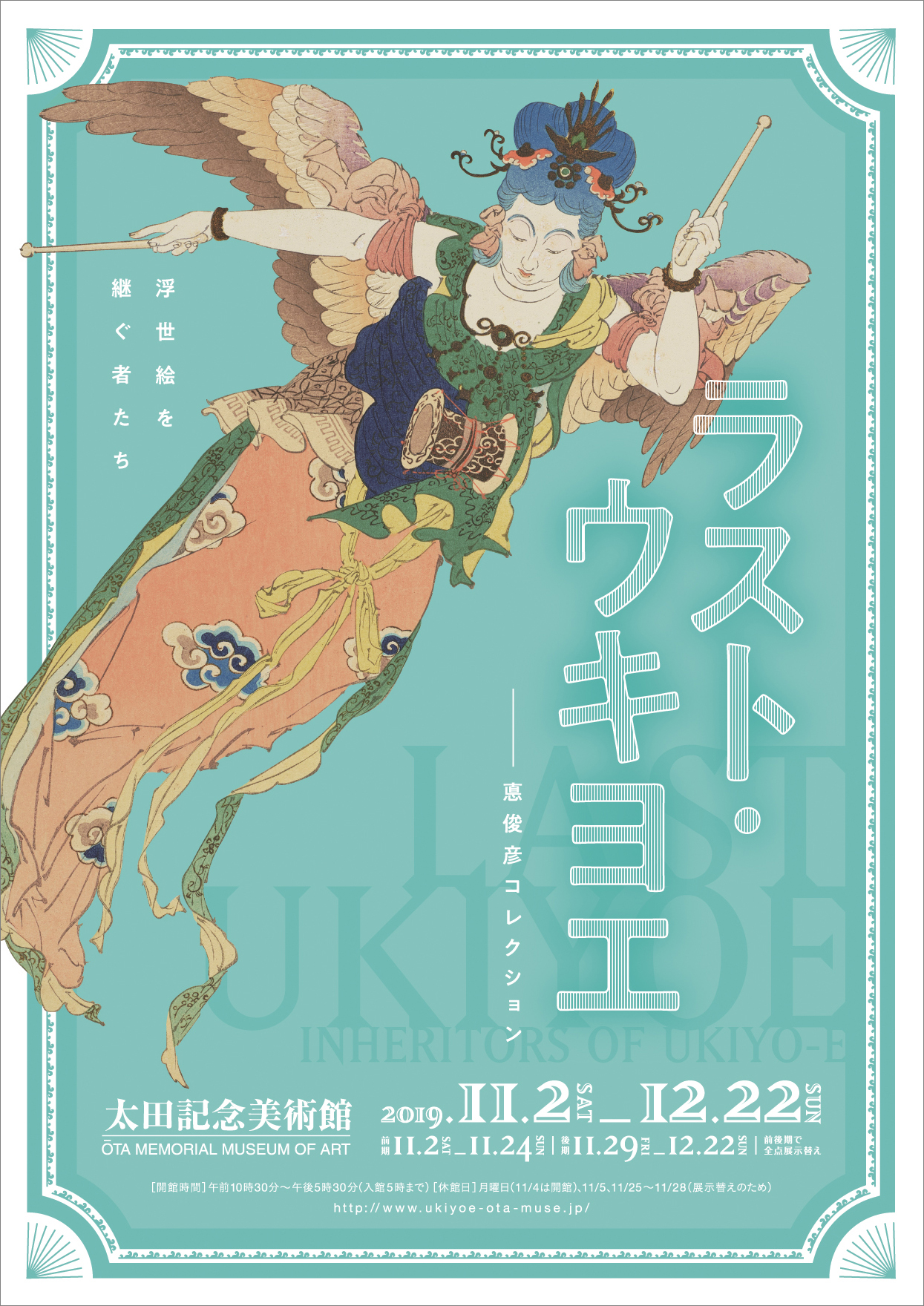
Discovering the ukiyo-e of the Meiji period lost in history
Many people understand ukiyo-e as a culture of the Edo period. However, ukiyo-e was continuously produced until the end of the Meiji period, in the beginning of the 20th century. Since their artistic value are disregarded, they are rarely introduced in museums today. This exhibition will discover 220 pieces of ukiyo-e from the Meiji period lost in history, from the collection of a painter and ukiyo-e collector, Isao Toshihiko.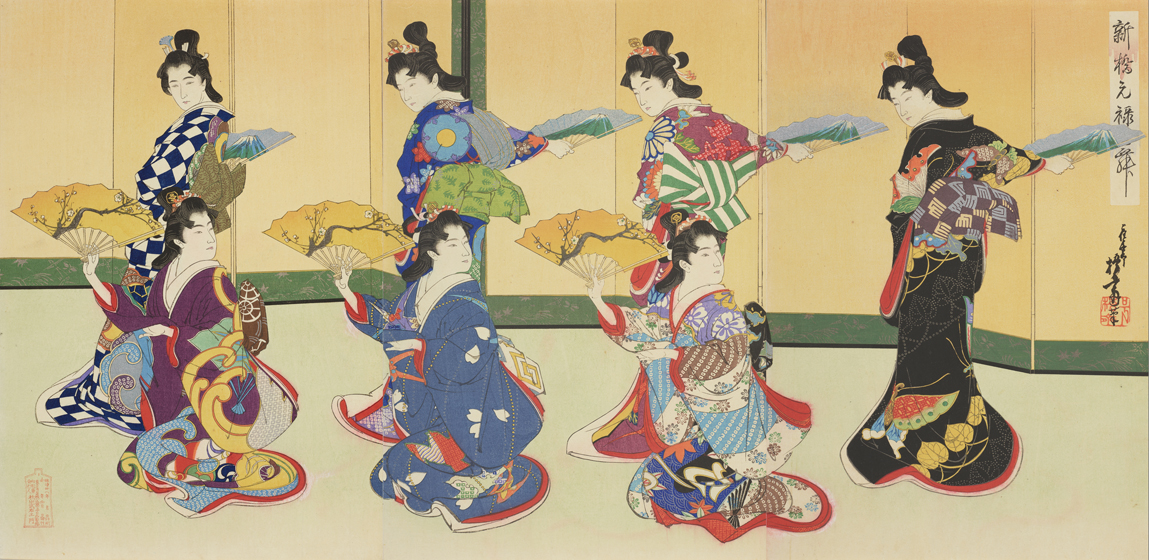
Migita Toshihide “Genroku-style Dance at Shinbashi” (second term)
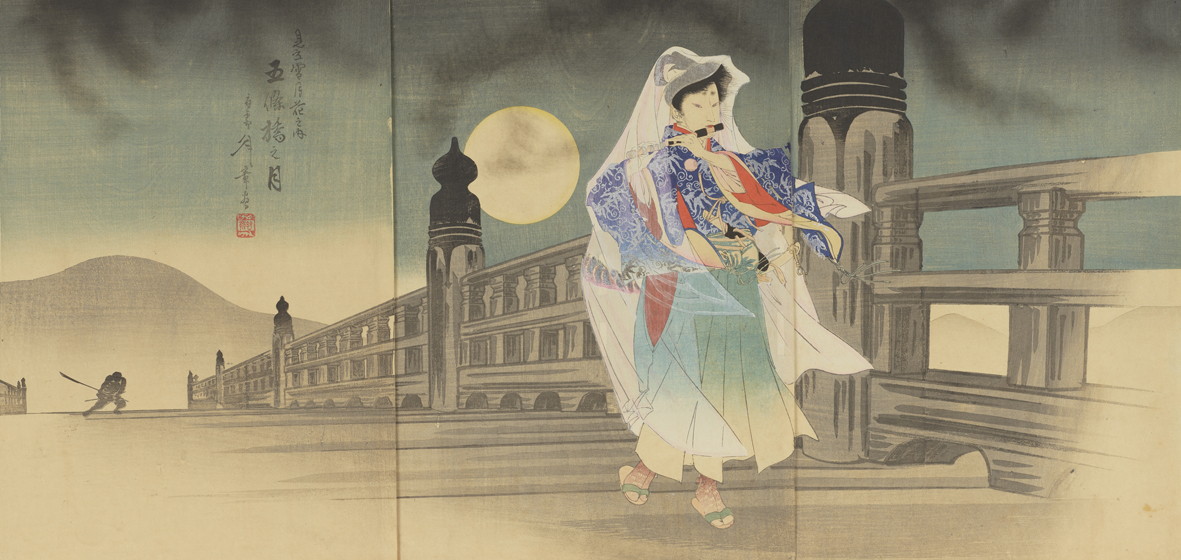
Nakazawa Toshiaki “Snow, the Moon and Flowers: Moon at Gojo Bridge” (first term)
Exploring the talent of 37 last ukiyo-e artists
Artists in the Meiji period such as Tsukioka Yoshitoshi and Kobayashi Kiyochika are often referred to as the last ukiyo-e artists. However, there were many artists after them in the following generation, striving to establish a new style during changing times. We will introduce the “Last Ukiyo-e” drawn by 37 artists such as Utagawa YoshimuneⅡ, Migita Toshihide, Mizuno Toshikata, Yōshū Chikanobu, Ogata Gekkō, Yamamoto Shōun and Miyagawa Shuntei, whose works were rarely presented until now.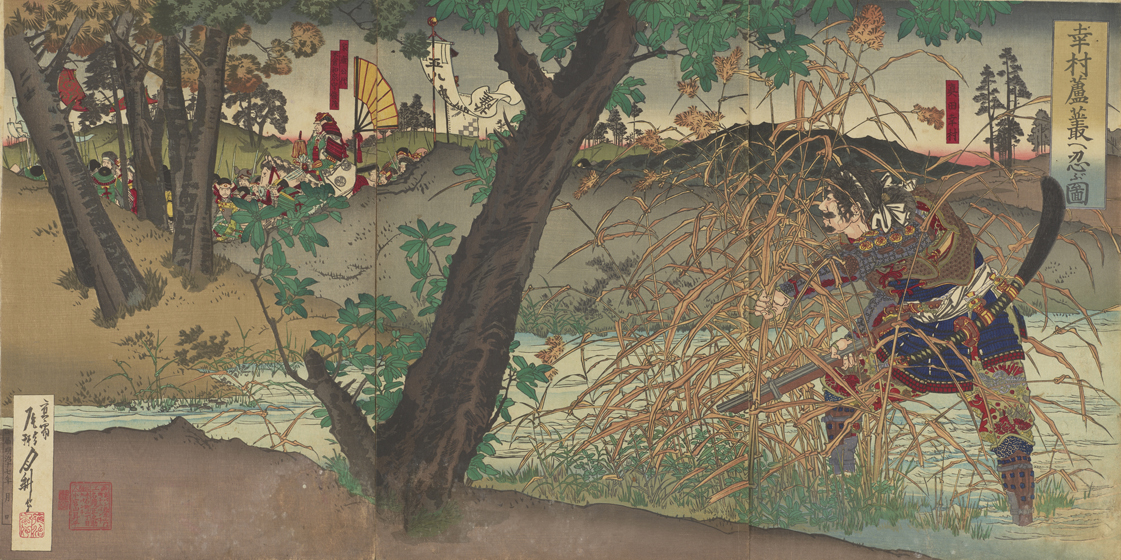
Ogata Gekkō “Picture of Sanada Yukimura Hiding Himself in the Reeds” (second term)
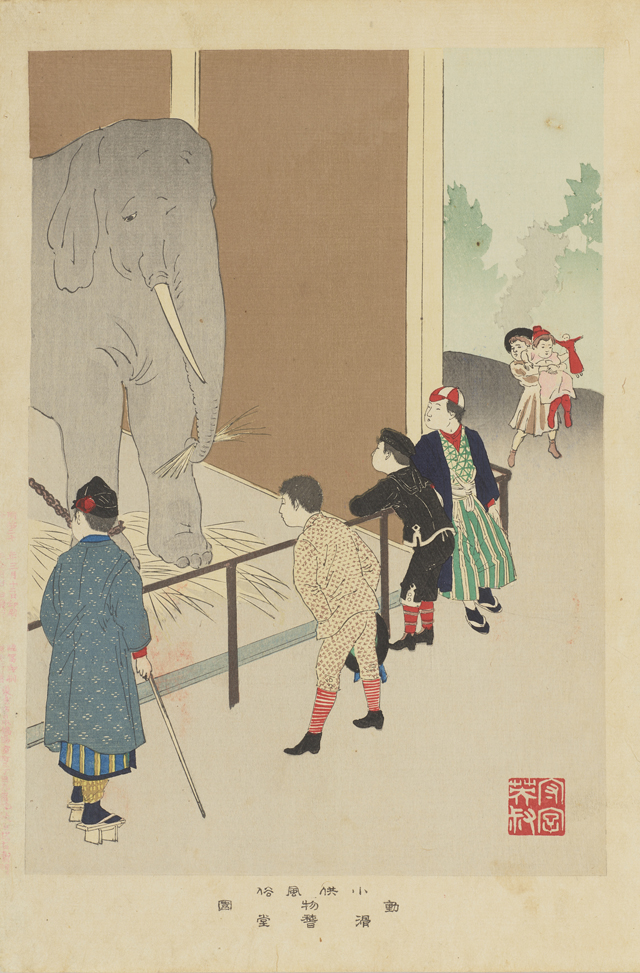
Miyagawa Shuntei “Various Aspects of Children: Zoo” (second term)
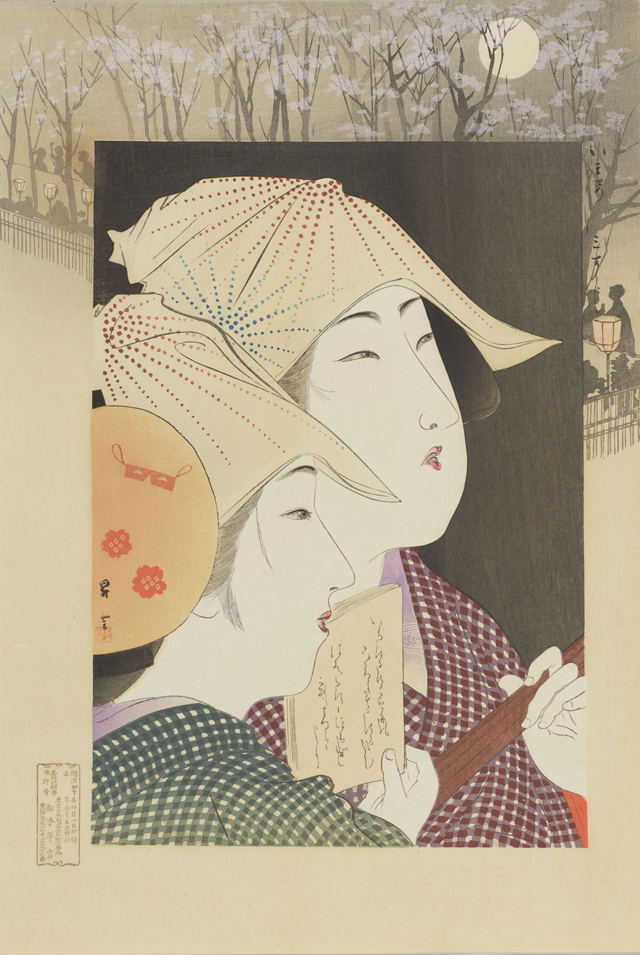
Yamamoto Shōun “Contemporary Figures: Shamisen (Japanese instrument)” (first term)
Pictures of beautiful women and the warriors with new painting styles
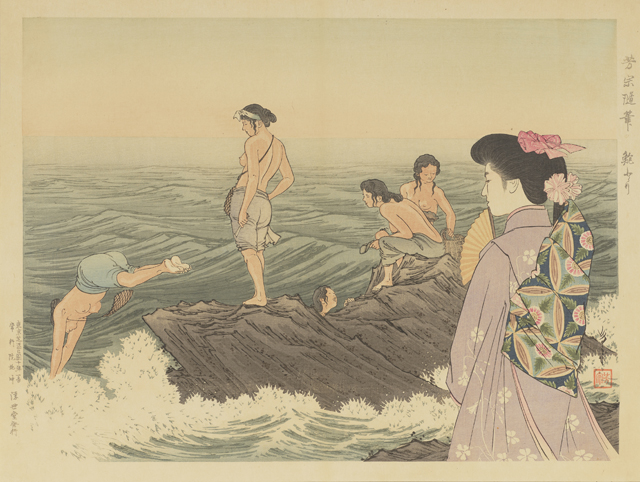
Utagawa Yoshimune Ⅱ “Sketches by Yoshimune: Abalone Gathering” (second term)
The themes depicted in the ukiyo-e paintings of the Meiji period, are those common in the Edo period such as beautiful women, famous places, children and warriors. However, found in them are new styles completely different from the Edo period, such as the pale and vivid color and dynamic composition. You will encounter paintings which will transform your conception of ukiyo-e.
Ogata Gekkō “Bitter Melons and a Dragon-fly” (first term)
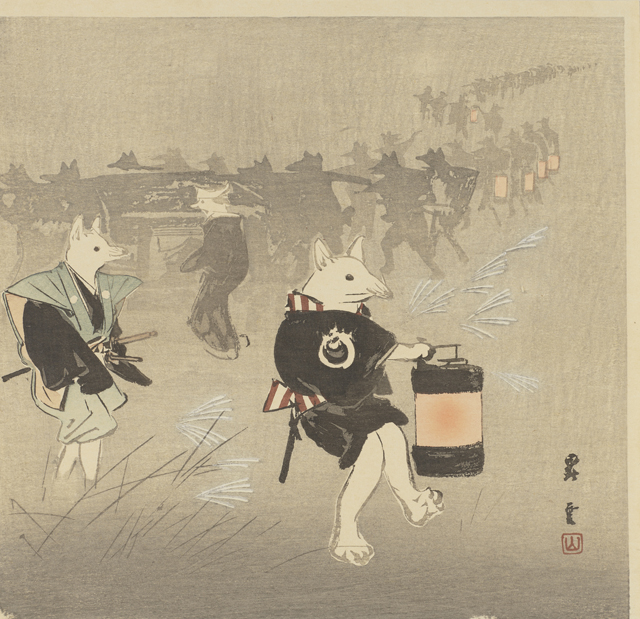
Yamamoto Shōun “Fox’s Wedding” (second term)
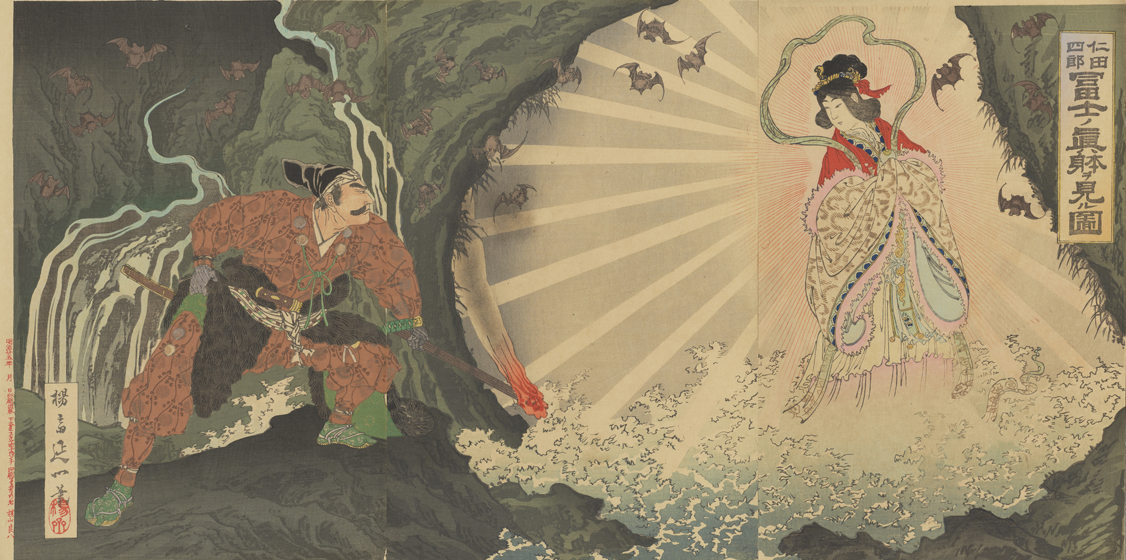
Yōsai Nobukazu “Nitta Shirō Watching the God of Mt. Fuji” (first term)
Developing a deep understanding of the history of ukiyo-e “Autumn fest of the Utagawa School”
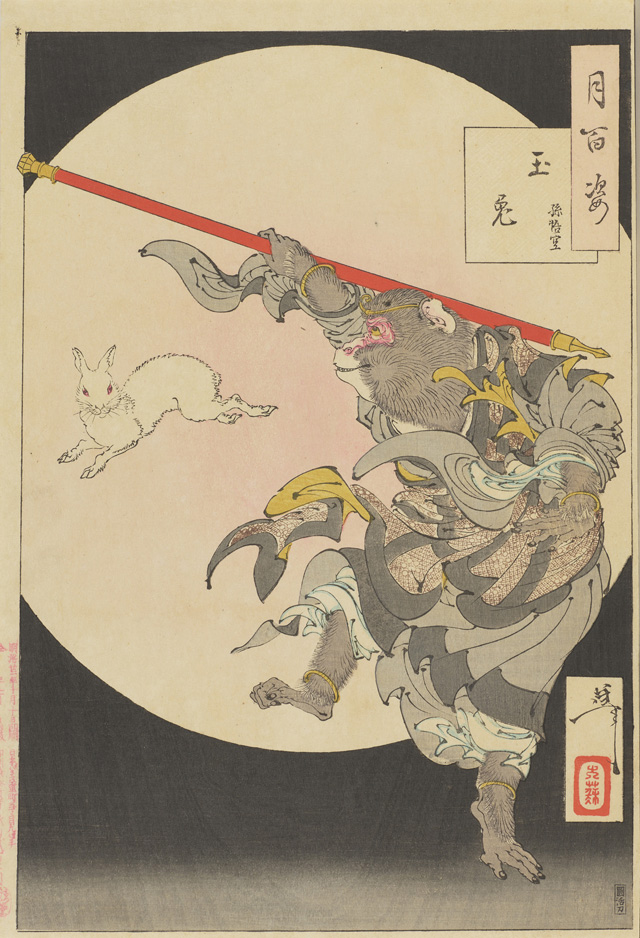
Tukioka Yoshitoshi “One Hundred Views of the Moon: Moon on Hazy-night: Jade Rabbit and Sun Wukong” (second term)
At Ota Memorial Museum of Art, we will hold an exhibition of Utagawa Toyokuni in September, and an exhibition of Utagawa Kuniyoshi in October. Subsequent to these, this exhibition will introduce many paintings by the ukiyo-e artists in the Meiji period who continued the genealogy of the Utagawa School. Through the three exhibitions, you can trace the genealogy of the Utagawa School from Edo to Meiji period. Ota Memorial Museum of Art, having its expertise in ukiyo-e, will bring this sequence of exhibitions to you for a deeper understanding of the history of ukiyo-e.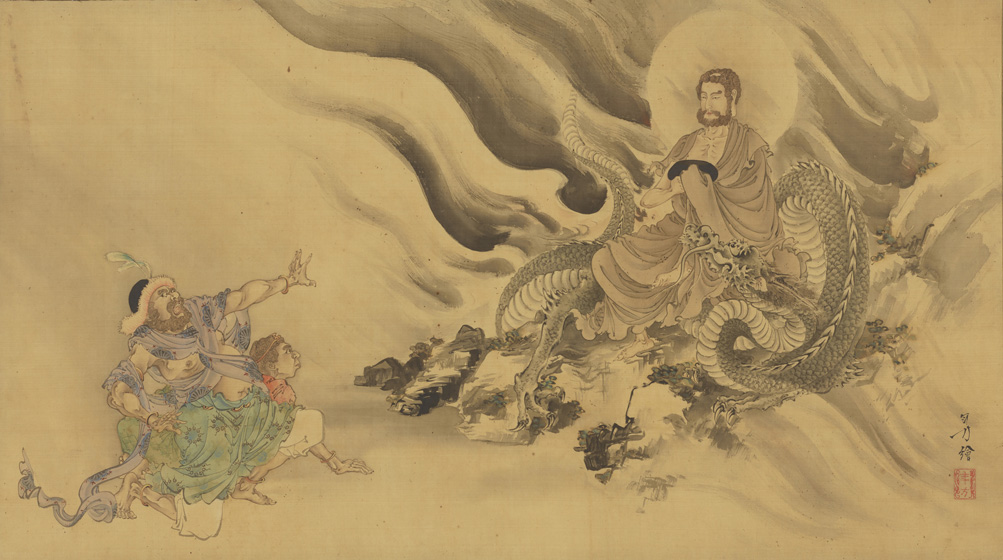
Mizuno Toshikata “Arhat, Nakasaina-sonja” (first term)
Highlight of the exhibition
Migita Toshihide “Sketches by Toshihide: Hagoromo” (first term)
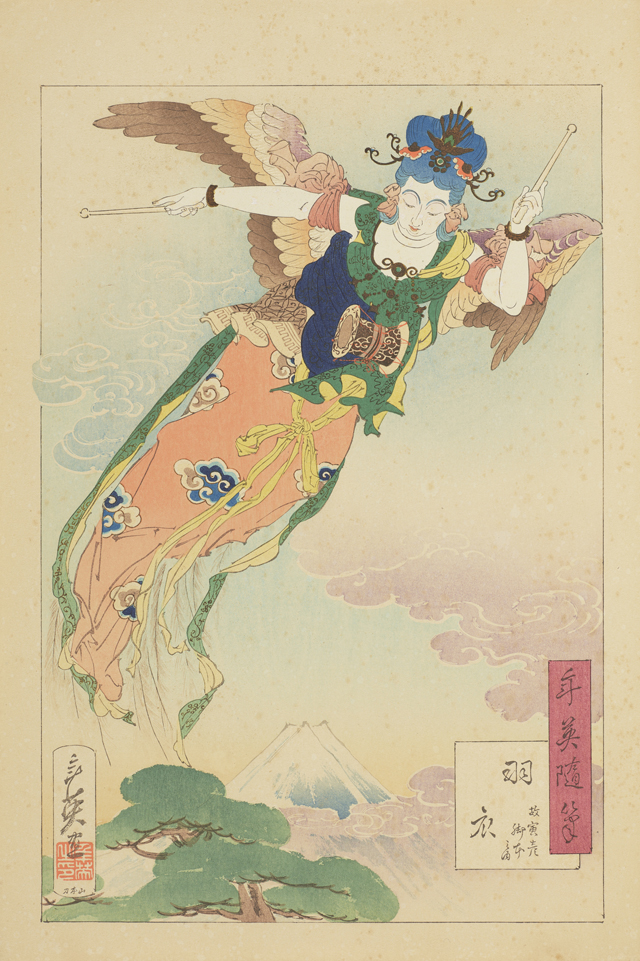 Represented is a work by Migita Toshihide (1863-1925), a pupil of Tsukioka Yoshitoshi, produced around 1921. This is a climax scene from the famous folktale called “The Legend of Hagoromo”, where the tennyo (a spiritual being similar to an angel) receives her stolen robe back from the fisherman and returns up to heaven. Her colorful outfit in green and orange and the facial expression which reminds us of Buddhist paintings are expressions of a new era, completely different from those of ukiyo-e in the Edo period.
Admission
Adult 1000 yen University and High school students 700 yen Junior High School Students and below Free Calendar
Closed-
-
-
-
2019 November
SUN MON TUE WED THU FRI SAT 1 2 3 4 5 6 7 8 9 10 11 12 13 14 15 16 17 18 19 20 21 22 23 24 25 26 27 28 29 30 -
2019 December
SUN MON TUE WED THU FRI SAT 1 2 3 4 5 6 7 8 9 10 11 12 13 14 15 16 17 18 19 20 21 22 23 24 25 26 27 28 29 30 31
-
-
-
Utagawa Kuniyoshi -And his daughters
2019, October 4th-27thWill be closed on October 7, 15, 21.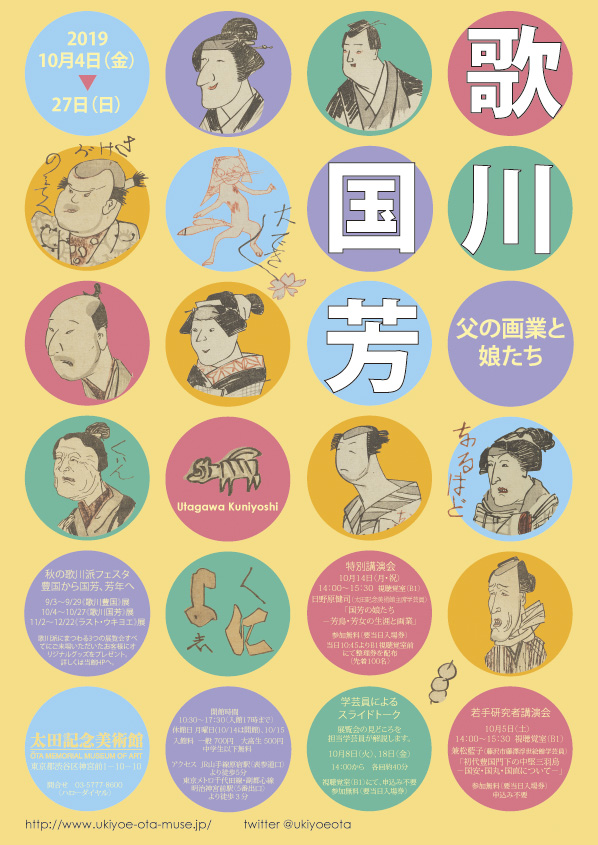
Not just another Utagawa Kuniyoshi exhibition
Ukiyo-e artist Utagawa Kuniyoshi is rapidly gaining popularity for his vibrant pictures of samurai warriors and humorous parody pictures. Today, exhibitions of his works are held all over Japan. However, this exhibition hosted by Ota Memorial Museum of Art, which specializes in ukiyo-e, goes above and beyond. Introduced in addition to the great number of Kuniyoshi’s representative works are the works by Kuniyoshi’s two daughters, which received little attention until today.
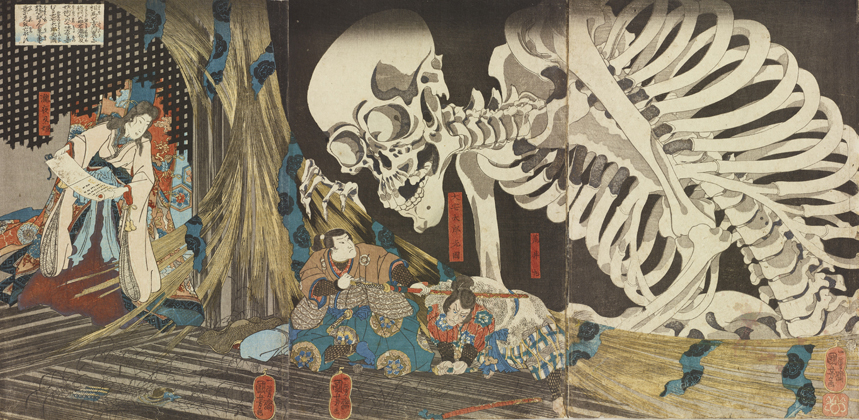
Utagawa Kuniyoshi “Takiyasha-hime Summoning a Skeleton at the Haunted Old Palace at Sōma”
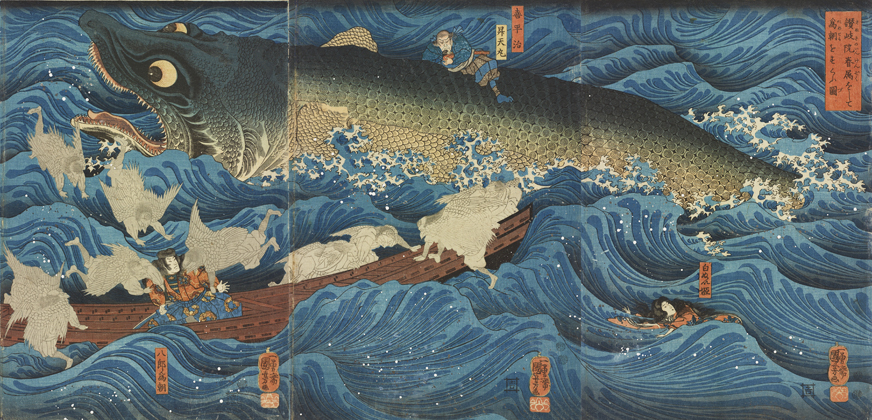
Utagawa Kuniyoshi “Chinzei Hachirō Tametomo Rescued by Bird Long-nosed Goblins”
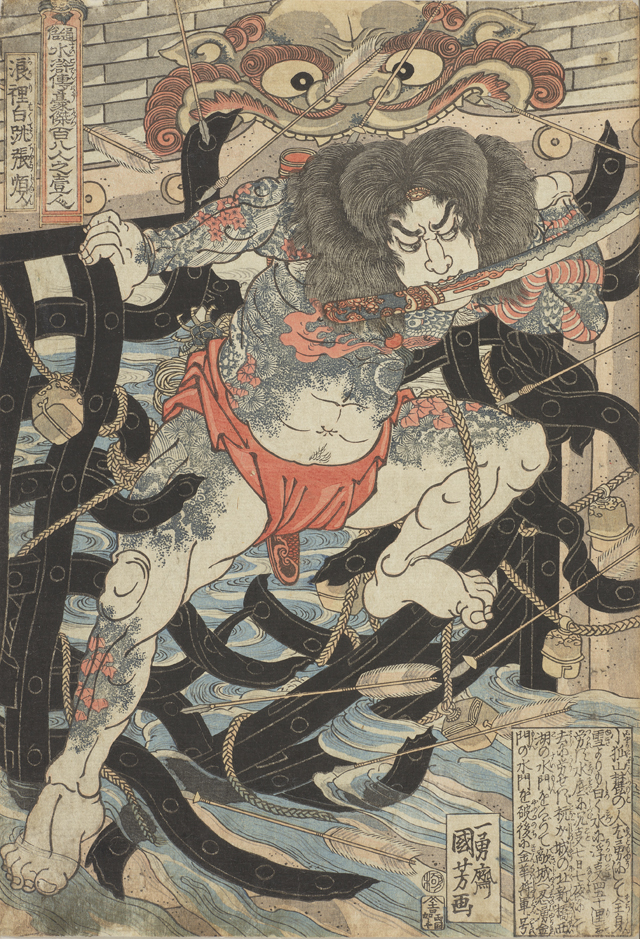
Utagawa Kuniyoshi “One Hundred and Eight Heroes from Tales of the Water Margin: Rōrihakuchō Chōjun”
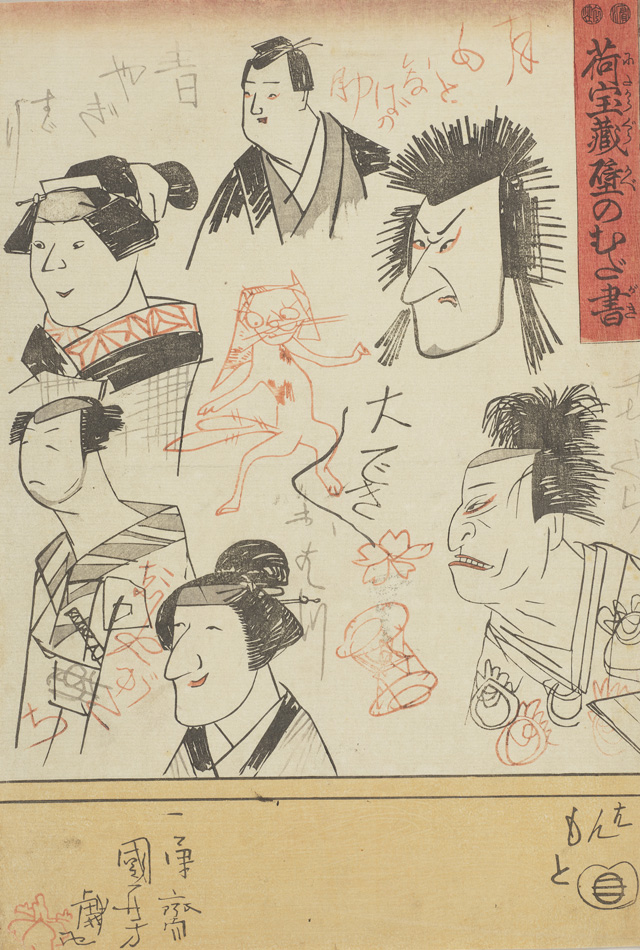
Utagawa Kuniyoshi “Scribbles on a Storehouse Wall”
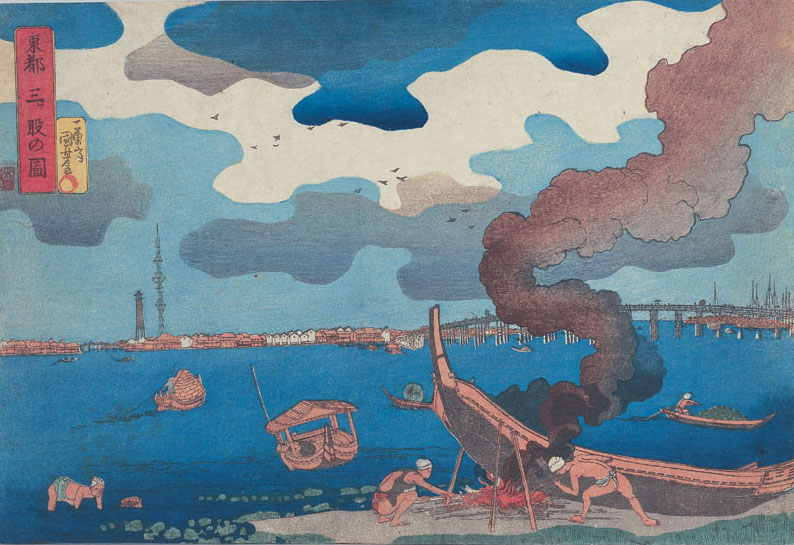
Utagawa Kuniyoshi “View of Mitsumata in Edo”
Kuniyoshi’s daughters were also ukiyo-e artists!
Katsushika Hokusai’s daughter Katsushika Ōi is well known when we speak of the daughter of an ukiyo-e artist. However, Ōi is not the only painter as the daughter of an ukiyo-e artist. Utagawa Kuniyoshi had two daughters and both of them had worked as ukiyo-e artists. His first daughter Tori worked as “Yoshitori” and his second daughter Yoshi worked as “Yoshijyo”. Most of their works were adding small drawings on Kuniyoshi’s work. Since each of them has only one painting known to be entirely their own, it is hard to say that they were full-fledged painters. They worked on ukiyo-e prints mainly in their teens. We can imagine them striving to paint ukiyo-e prints and help their father.
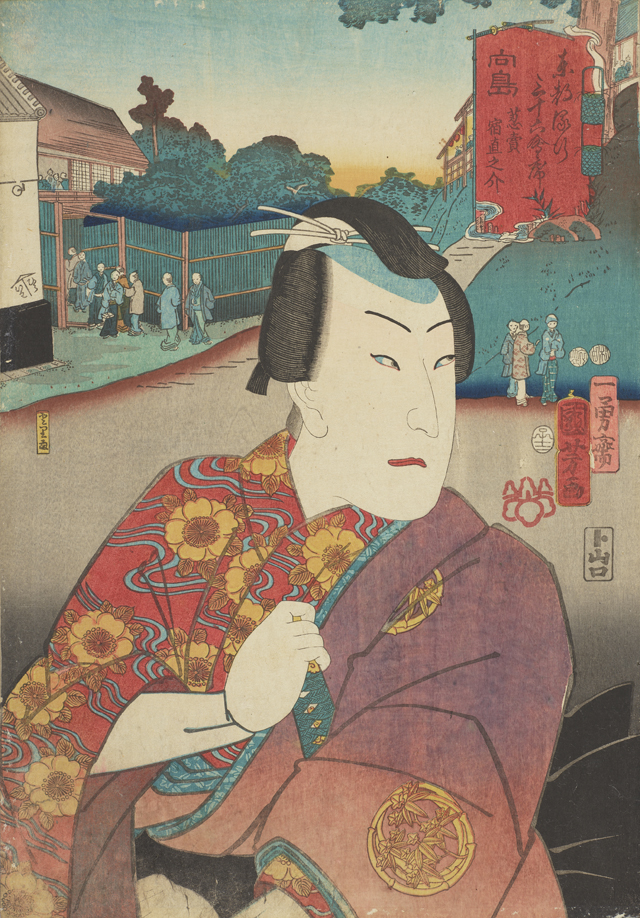
Utagawa Kuniyoshi / Utagawa Yoshitori “Thirty-six Famous Restaurants in Edo: Mukōjima, Negiuri Tomoinosuke”
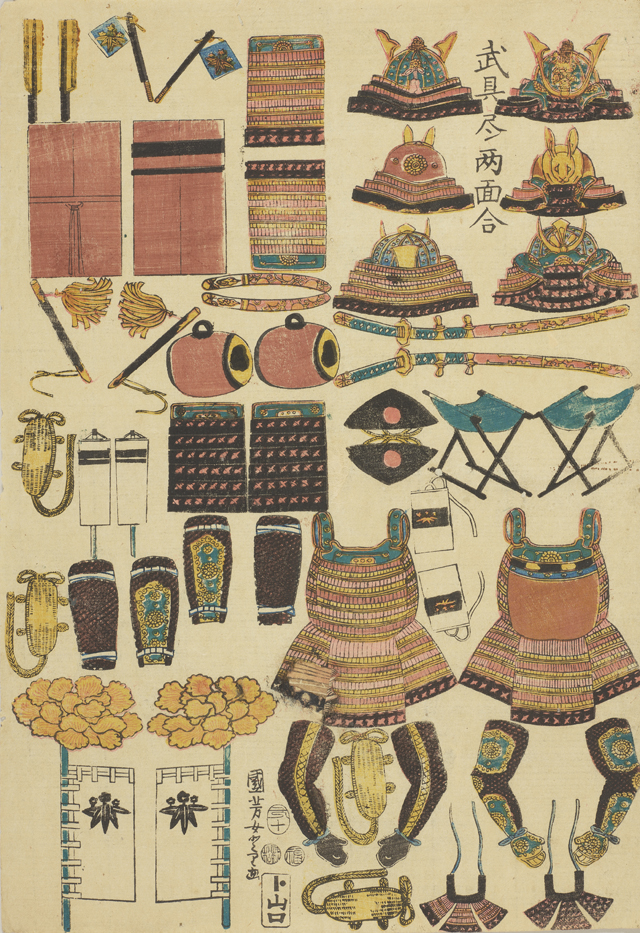
Utagawa Yoshitori “Both Faces Collection of Swords and Armors”
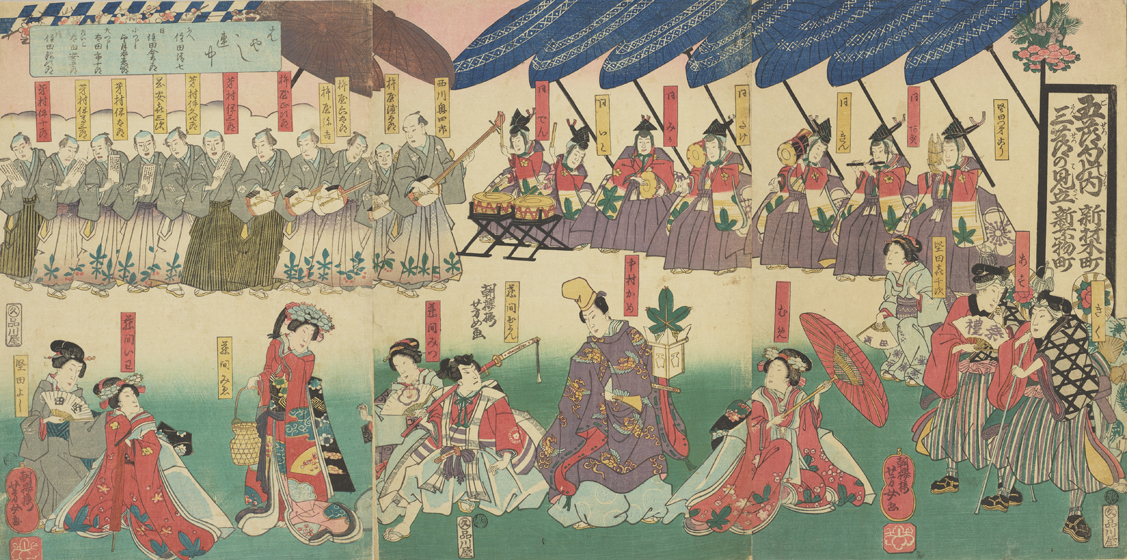
Utagawa Yoshijo “Festivals at Shin-zaimoku-Chō and Shin-norimono-chō in March”
A deep understanding of the history of ukiyo-e “Autumnfest of the Utagawa School”
At Ota Memorial Museum of Art, we will hold an exhibition of Utagawa Toyokuni, the master of Kuniyoshi in September, and an exhibition of ukiyo-e artists in the Meiji period including disciples of Kuniyoshi, such as Tsukioka Yoshitoshi, in November and December. Through the three exhibitions, you can trace the genealogy of the Utagawa school, inherited from Toyokuni to Kuniyoshi, and to Yoshitoshi. Ota Memorial Museum of Art, specializing in ukiyo-e brings to you this sequence of exhibitions for deeper understanding of the history of ukiyo-e.
- ①September 3rd-29th “Utagawa Toyokuni – A man who surpassed Sharaku”
- ②October 4th-27th “Utagawa Kuniyoshi -And his daughters”
- ③November 2nd- December 22nd “Last Ukiyoe -inheritors of ukiyo-e”
Highlight of the exhibition
Utagawa Kuniyoshi “Views of Edo: Eitai Bridge and Mitsumata Viewed from Nakazu”
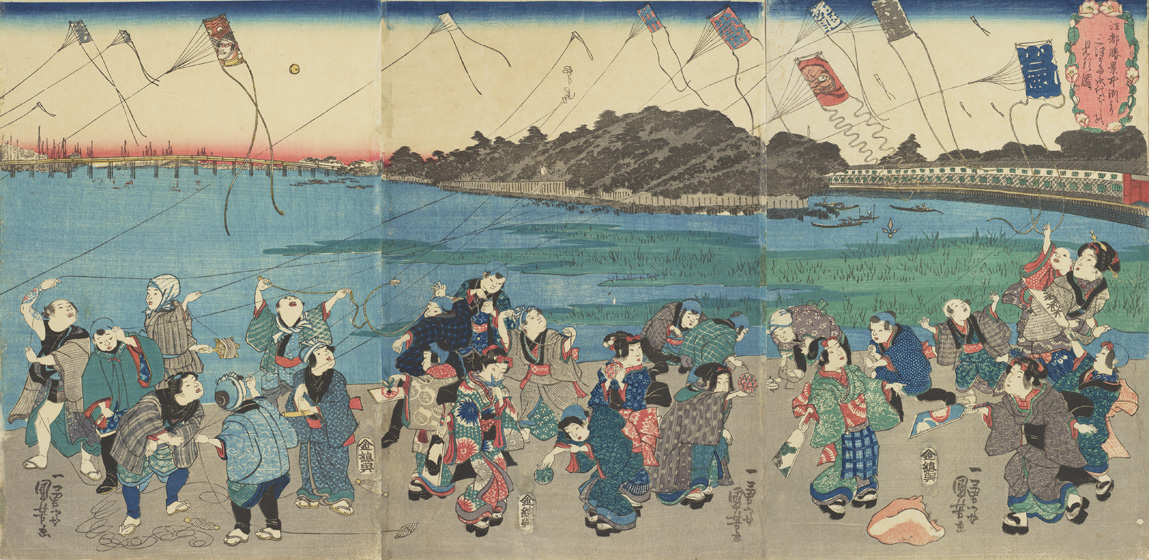
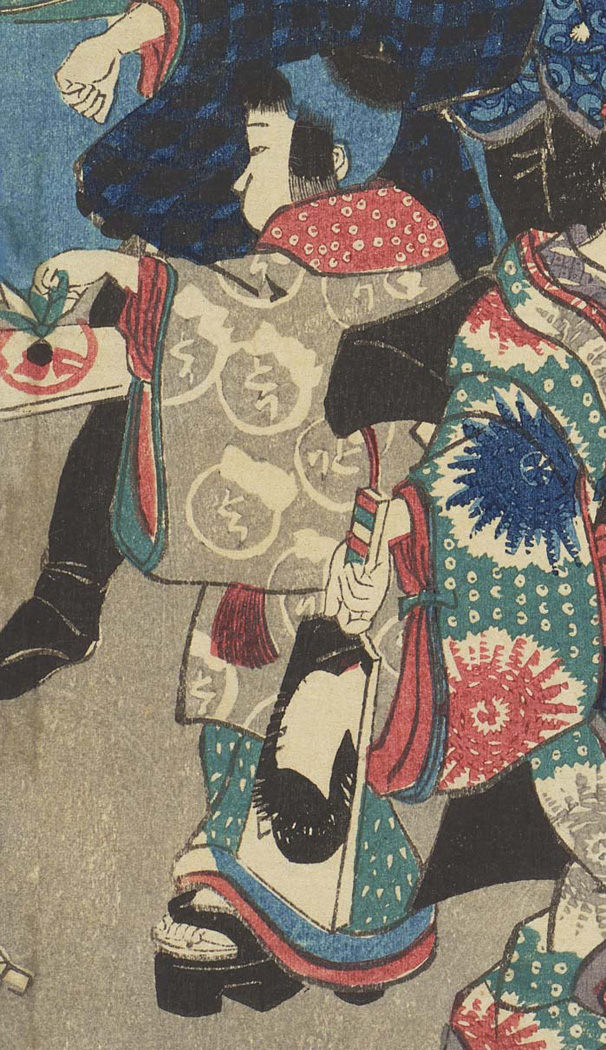
Represented is a scenery on New Year’s Day where children are flying kite and playing Japanese traditional badminton. Found on the kimono of one of the girls, is the signature used by the artists of the Utagawa Family and the word “tori.” From these subtle hints, the girl is considered to be Kuniyoshi’s first daughter “Tori”. Tori was about 3 or 4 years old when the picture was painted. As she was the daughter Kuniyoshi had after the age of 40, he might have drawn her secretly in his work for her cuteness.
Admission
Adult 700 yen University and High school students 500 yen Junior High School Students and below Free Closed
-
-
-
-
2019 October
SUN MON TUE WED THU FRI SAT 1 2 3 4 5 6 7 8 9 10 11 12 13 14 15 16 17 18 19 20 21 22 23 24 25 26 27 28 29 30 31
-
-
ラスト・ウキヨエ 浮世絵を継ぐ者たち ―悳俊彦コレクション
2019年11月2日(土)~12月22日(日)前期 11月2日(土)~24日(日)後期 11月29日(金)~12月22日(日)※前後期で全点展示替え11月5、11、18、25~28、12月2、9、16日は休館します。
歴史に埋もれた明治の浮世絵を掘り起こす
浮世絵といえば江戸時代の文化と考える方は多いでしょう。しかしながら、明治時代の終わり、20世紀の初頭まで、浮世絵版画は制作され続けていました。現在ではその美術的価値があまり評価されていないため、美術館で紹介されることがほとんどない状況です。本展では、洋画家であり、浮世絵コレクターとしても知られる悳俊彦(いさお・としひこ)氏のコレクションの中から、歴史に埋もれた明治の浮世絵、約220点を掘り起こします。
右田年英「新橋元禄舞」(後期)
中澤年章「見立雪月花之内 五條橋之月」(前期)
37人の最後の浮世絵師たちの魅力を探る
明治時代に活躍した月岡芳年や小林清親は、しばしば「最後の浮世絵師」と称されます。しかしながら、彼らの次の世代にも数多くの絵師たちが活躍しており、移り変わる時代の中で新しい浮世絵を模索していたのです。二代歌川芳宗、右田年英、水野年方、楊洲周延、尾形月耕、山本昇雲、宮川春汀など、これまであまり紹介されてこなかった最後の浮世絵師たち、総勢37人の「ラスト・ウキヨエ」をご紹介します。
尾形月耕「幸村蘆叢へ忍ぶ図」(後期)
宮川春汀「小供風俗 動物園」(後期)
山本昇雲「いま姿 三すじ」(前期)
新しいテイストを盛り込んだ美人画や武者絵
二代歌川芳宗「芳宗随筆 鮑とり」(後期)
明治時代の浮世絵は、江戸時代と同じように、美人画や名所絵、子ども絵、武者絵など、人々に馴染みのあるテーマが描かれています。しかしながら、淡く鮮やかな色彩や、迫力ある構図など、江戸時代の浮世絵とは全く異なる新しいテイストが盛り込まれているのです。今までの浮世絵のイメージを覆すような浮世絵に出会えることでしょう。
尾形月耕「苦瓜と糸蜻蛉」(前期)
山本昇雲「狐の嫁入り」(後期)
楊斎延一「仁田四郎 冨士ノ真躰ヲ見ル図」(前期)
浮世絵の歴史をディープに学ぶ #秋の歌川派フェスタ
月岡芳年「月百姿 玉兎 孫悟空」(後期)
太田記念美術館では、9月には歌川豊国展、10月には歌川国芳展を開催いたします。それに続く今回の展覧会では、歌川派の系譜に連なる明治の浮世絵師たちの作品を多数紹介します。これらの3つの展覧会を通してご覧いただくことで、江戸から明治へと続く歌川派の系譜をたどることができるでしょう。浮世絵専門の美術館ならではの、浮世絵の歴史をより深く学べる展示構成となっています。
水野年方「那迦犀那尊者図」(前期)
見どころの作品
右田年英「年英随筆 羽衣」(前期)
月岡芳年の門人である右田年英(1863~1925)の作品。大正10年(1921)頃の作品です。三保の松原で漁師から羽衣を返してもらった天女が、天へと昇っていく羽衣伝説のクライマックス場面。仏画を思わせる天女の表情や、色鮮やかな緑やオレンジといった天女の衣装に、江戸時代の浮世絵とは全く異なる、新しい時代の表現を感じさせます。入館料
*リピーター割引のご案内* 会期中2回目以降ご鑑賞の方は半券提示で200円割引いたします。(割引の併用はできません)一般 1000円 大高生 700円 中学生以下 無料 - *中学生以上の学生は学生証をご提示下さい。
- *団体(10名以上)は1名さまあたり100円引き。 (一括にてお支払い願います。事前のお申し込みにご協力ください。)
- *障害者手帳提示でご本人とお付き添い1名さま100円引き。
- *その他各種割引についてはお問い合わせください。
- *料金は消費税込み。
開館日カレンダー
休館日-
-
-
-
2019年11月
SUN MON TUE WED THU FRI SAT 1 2 3 4 5 6 7 8 9 10 11 12 13 14 15 16 17 18 19 20 21 22 23 24 25 26 27 28 29 30 -
2019年12月
SUN MON TUE WED THU FRI SAT 1 2 3 4 5 6 7 8 9 10 11 12 13 14 15 16 17 18 19 20 21 22 23 24 25 26 27 28 29 30 31
-
-
-
Utagawa Toyokuni – A man who surpassed Sharaku
2019, September 3rd-29thWill be closed on September 9, 17, 24.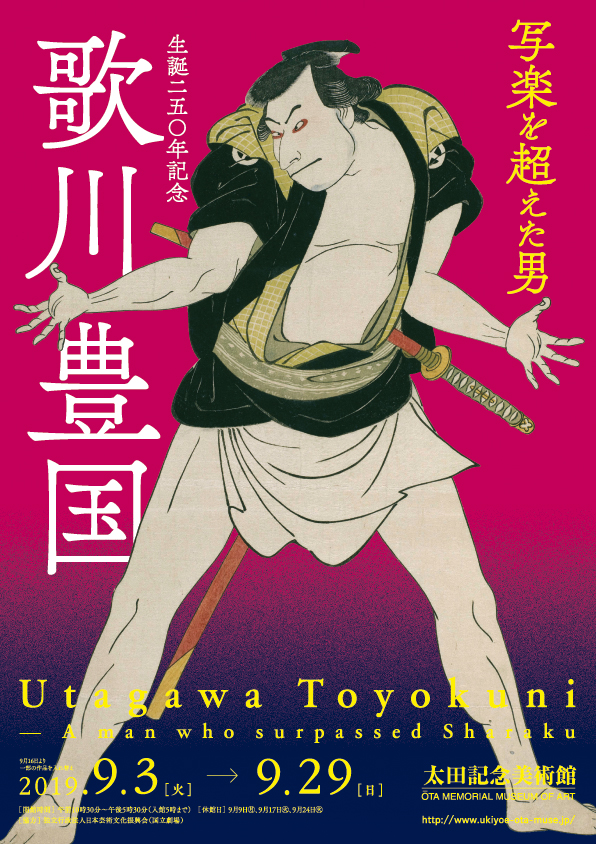
Utagawa Toyokuni (1769~1825) is an ukiyo-e artist who played an active part in the field of yakusha-e (portraits of kabuki actors) and bijin-ga (pictures of beautiful women). He studied under Toyoharu, the founder of the Utagawa School. Since he published his representative series “Kabuki Actors on the Stage” in 1794, he stood out in the field of yakusha-e along with Tōshūsai Sharaku and Katsukawa Shun’ei. However, Toyokuni’s clear touch gained greater popularity than the others and he became a leading artist. In the field of bijin-ga, he competed with popular artist Kitagawa Utamaro. Compared to Utamaro’s amorous women, Toyokuni’s women were healthy and elegant, and this also attracted people. Moreover, he created illustrations for books energetically enough to vie with Katsushika Hokusai. Many talented young artists rallied around Toyokuni, who was a leading artist in various genres, and the Utagawa School became the biggest school of ukiyo-e at the end on the Edo period. This year commemorates the 250th year since his birth. Although Toyokuni played an important role as the master of Kuniyoshi and Kunisada, who are more recent popular ukiyo-e artists, exhibitions showing the entirety of his work have rarely been held. This exhibition introduces various genres of Toyokuni’s works and brings out their charms.
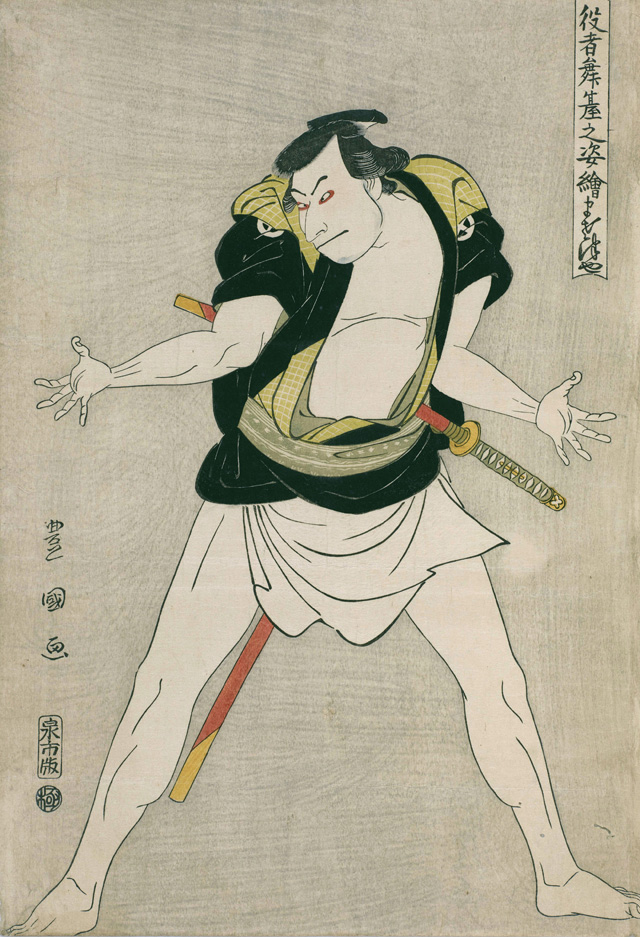
Utagawa Toyokuni “Kabuki Actors on the Stage: Masatsu-ya”
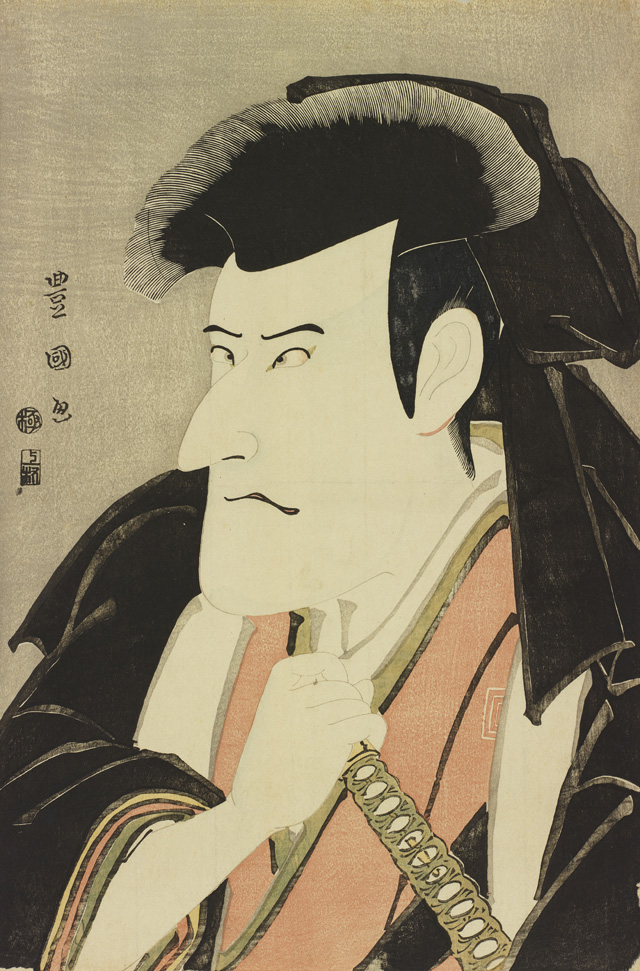
Utagawa Toyokuni “Kabuki Actor Ichikawa Komazō Ⅲ as Sasaki Ganryū”
Toyokuni’s yakusha-e, “Kabuki Actors on the Stage,” made him a front runner surpassing Sharaku
Toyokuni became a star artist in the genre of yakusha-e which portrayed Kabuki actors in Edo. His representative series of yakusha-e, “Kabuki Actors on the Stage,” published in 1749 attracted people with its refreshingly honest depictions of actors. In May of the same year, Tōshūsai Sharaku debuted with 28 bust portraits of actors made luxuriously with mica and published by Tsutaya Jūzaburō. This launched the rivalry between Toyokuni, Sharaku and Shun’ei, who were already big names in this genre. However, public interest toward Sharaku did not last long and he disappeared after about 10 months. Shun’ei, too, stopped making yakusha-e within a few years. Toyokuni, who gained both popularity and ability, became the leading artist of yakusha-e and pursued his own unique expression.
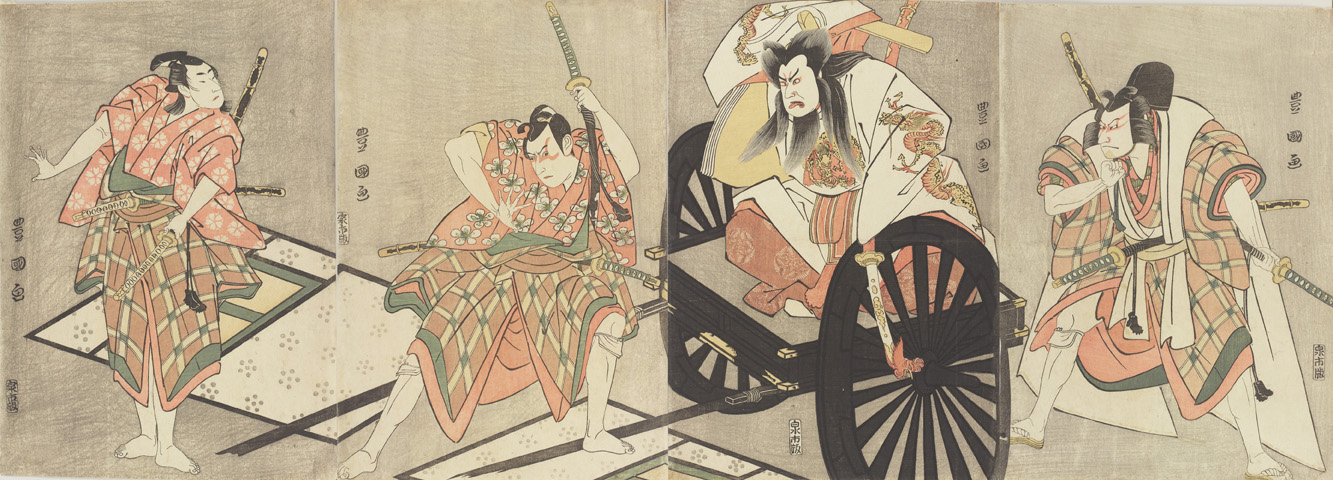
Utagawa Toyokuni “Kabuki Play “Sugawaradenju Tenarai Kagami” Kuruma-biki”
Bijin-ga works that competed with Utamaro – from women of samurai families to the lowest-ranked courtesans
Toyokuni was skilled at depicting not only kabuki actors but also beautiful women. Compared to Utamaro’s amorous women, Toyokuni’s women were healthy and elegant, and this also attracted people. Moreover, Toyokuni is also known for depicting women in various occupations and ranks such as women from samurai families, female farmers, high-ranked courtesans in Yoshiwara and the lowest-ranked courtesans working on boats in the illustrated book “Ehon Imayō Sugata”.
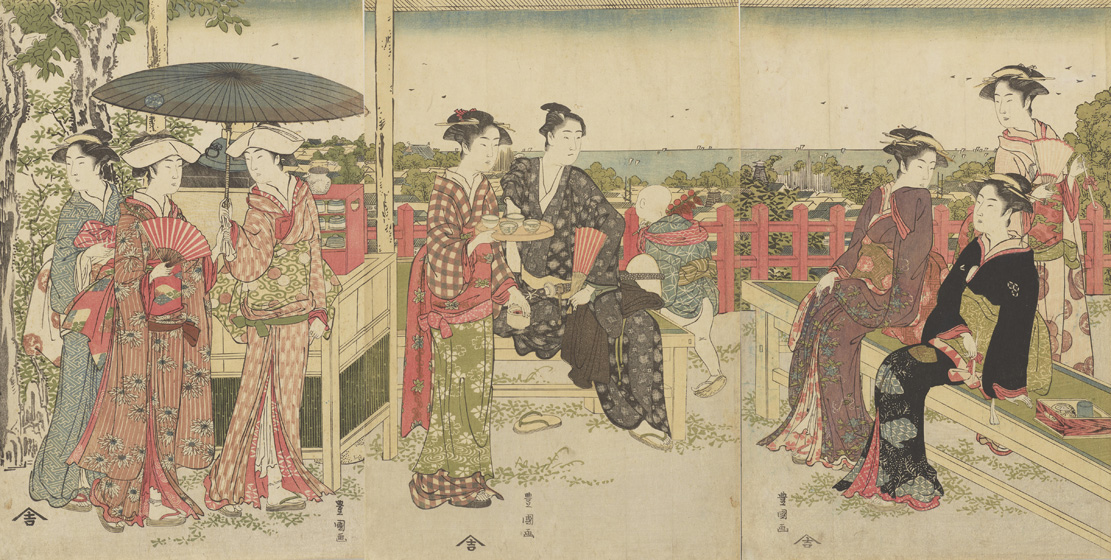
Utagawa Toyokuni “Summer View of Atagoyama”
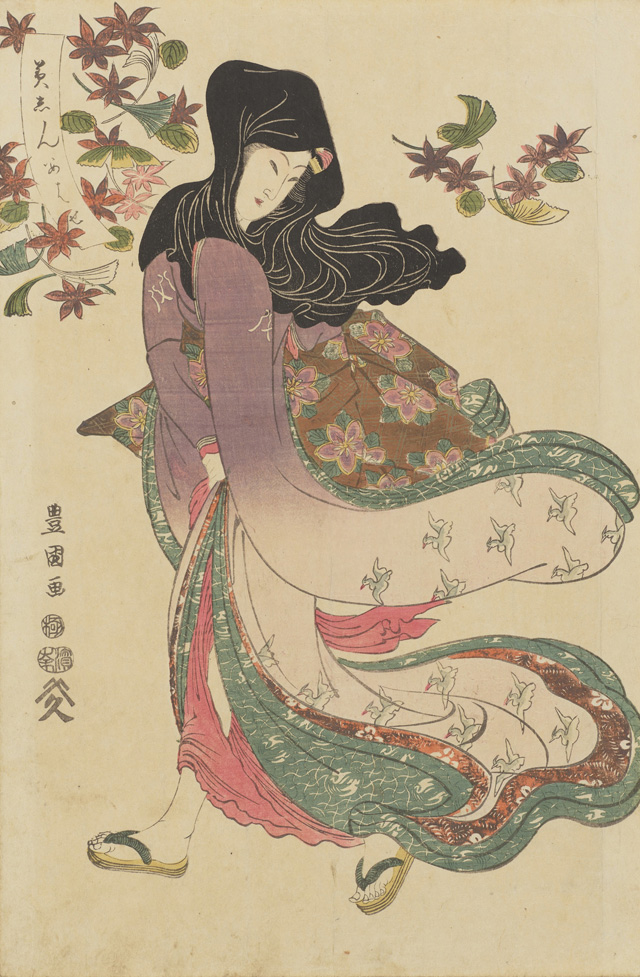
Utagawa Toyokuni “Collection of Beautiful Women”
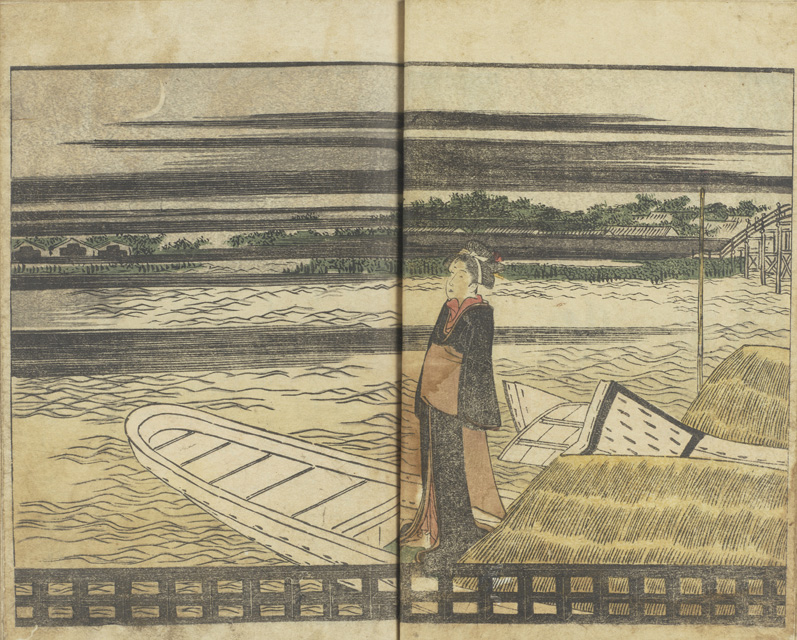
Utagawa Toyokuni “Illustrated Book “Ehon Imayō Sugata””
Book illustrations that competed with Hokusai – amusing anecdotes of popular artist Toyokuni
Toyokuni, who became a popular artist in the genre of yakusha-e and bijin-ga, competed with Hokusai in the various genres of illustrated books. He had many deadlines from various publishers, and was popular enough to be confined indoors working. However, he was not known as a quick worker. One story says that when Toyokuni was confined to his room in spring, he said he wanted to go see the cherry blossoms at the Sumida River and stopped drawing. The publisher brought a branch of cherry blossoms to Toyokuni’s room and he resumed drawing. There are many anecdotes that remind us of manga artists in the Showa period who were bold and openhearted.
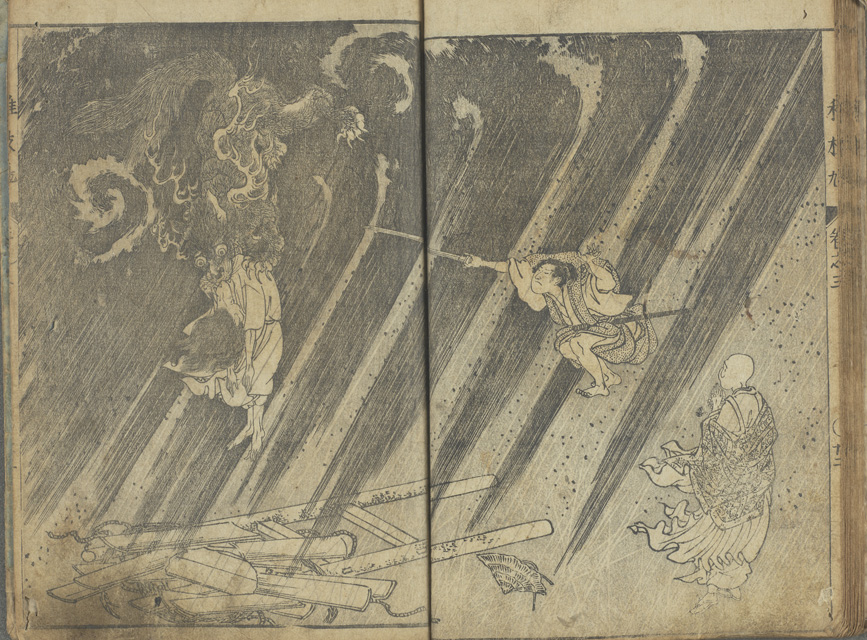
Kyokutei Bakin/Utagawa Toyokuni Illustrated Book “Fukushū Kitan Wakae no Hato” (private collection)
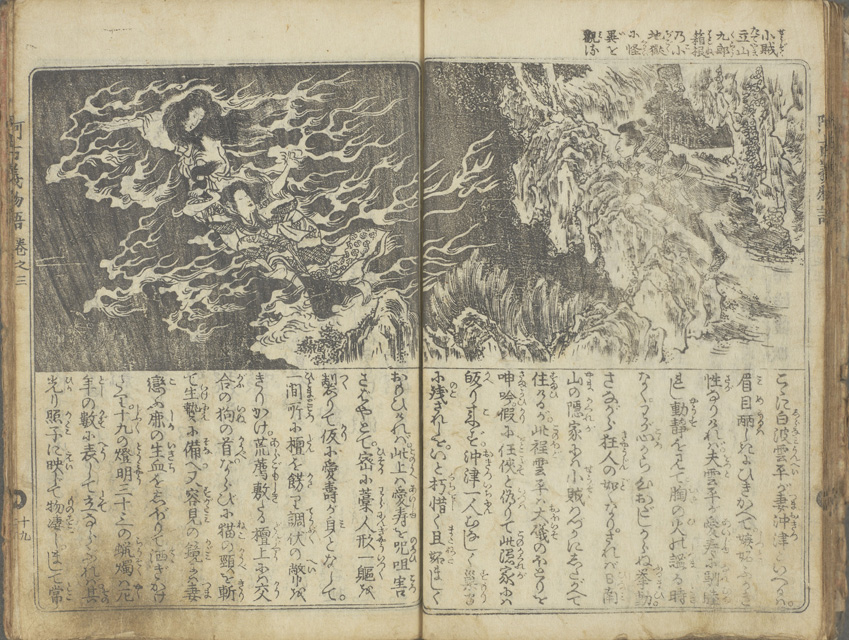
Kyokutei Bakin/Utagawa Toyokuni Illustrated Book “Fukushū Kitan Wakae no Hato” (private collection)
The roots of Kuniyoshi? Toyokuni’s caricature pictures
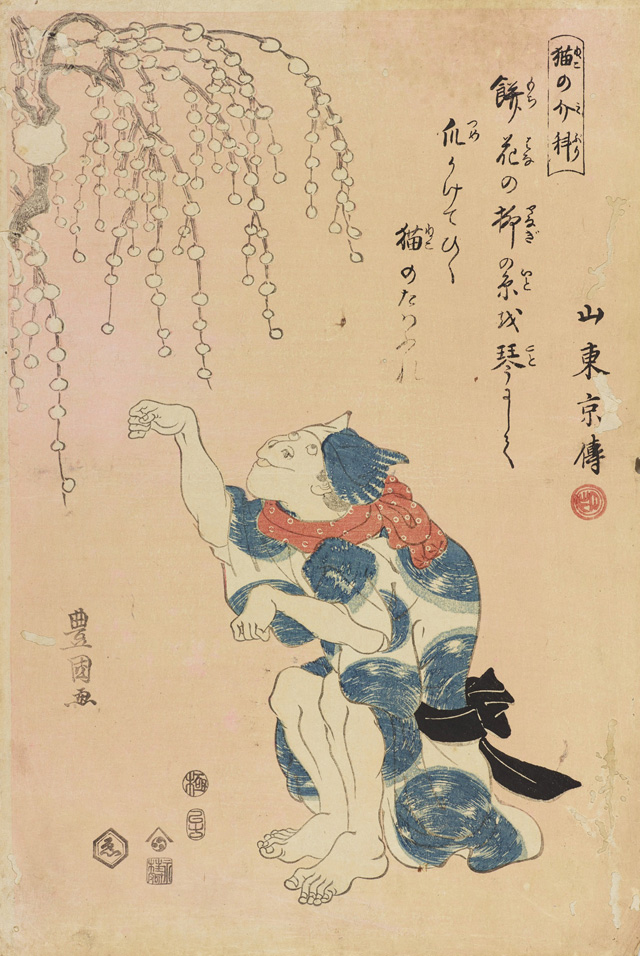
Utagawa Toyokuni “Mimicking a Cat” (private collection)
Although Toyokuni did not create many of them, he did leave behind some interesting parody pictures. This picture depicts a man pretending to be a cat. The man is playing with decorative New Year ornaments made of rice cakes. There is something amusing about Toyokuni’s humorous depictions of cats on towels and kimono. Toyokuni’s pupil, popular uikiyo-e artist Kuniyoshi, was skilled at caricature pictures and left many works featuring farcical pictures of cats. In this way, Toyokuni’s caricature pictures can be said to be the roots of Kuniyoshi.
Featured Work
Utagawa Toyokuni “Kabuki Actor Sawamura Sōjūrō Ⅲon the Boat at Night”
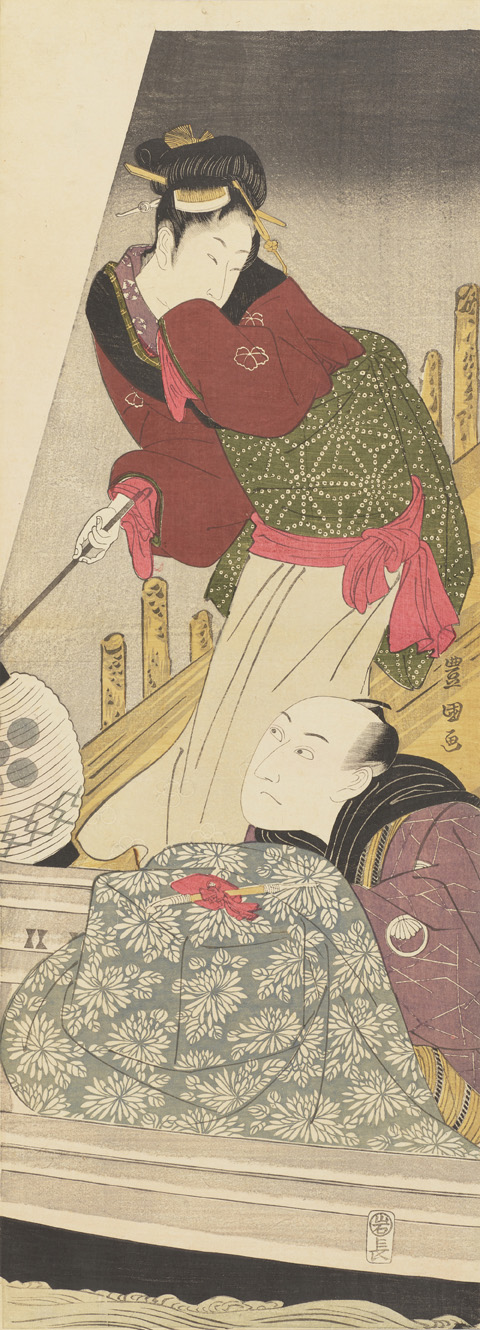
One of the series of pictures depicting the daily lives of popular kabuki actors with beautiful women. This picture depicts Sawamura Sōjūrō Ⅲ who is seating hunched, warming himself at a kotatsu (a small table with a heater placed underneath) on a boat. We can feel the coldness of the air from the picture. Since the woman standing on the dock looks surprised, she might have just noticed the figure of this famous kabuki actor. The gradation of black applied from the top expresses the night, and the depiction of the light from the lantern the woman is holding also makes an impact. This work is quintessential Toyokuni, showcasing his remarkable skill in both portraits of kabuki actors and pictures of beautiful women. Sawamura Sōjūrō Ⅲ was an active kabuki actor during 1789-1801 who was drawn by many ukiyo-e artists of this period such as Toyokuni, Tōshūsai Sharaku and Katsukawa Shun’ei.
Admission
Adult 1000 yen University and High school students 700 yen Junior High School Students and below Free Calendar
Closed
-
-
-
-
2019 September
SUN MON TUE WED THU FRI SAT 1 2 3 4 5 6 7 8 9 10 11 12 13 14 15 16 17 18 19 20 21 22 23 24 25 26 27 28 29 30 - ①9/3~9/29「生誕250年記念 歌川豊国 ―写楽を超えた男」展
- ②10/4~10/27「歌川国芳 ―父の画業と娘たち」展
- ③11/2~12/22「ラスト・ウキヨエ 浮世絵を継ぐ者たち ―悳俊彦コレクション」展
- 2019年10月8日(火)14:00
- 2019年10月18日(金)14:00
-
-
-
-
2019年10月
SUN MON TUE WED THU FRI SAT 1 2 3 4 5 6 7 8 9 10 11 12 13 14 15 16 17 18 19 20 21 22 23 24 25 26 27 28 29 30 31
-
-
Invitation to different worlds – Specters, the spiritual world and foreign countries
2019, August 2nd-28thWill be closed on August 5, 13, 19, 26.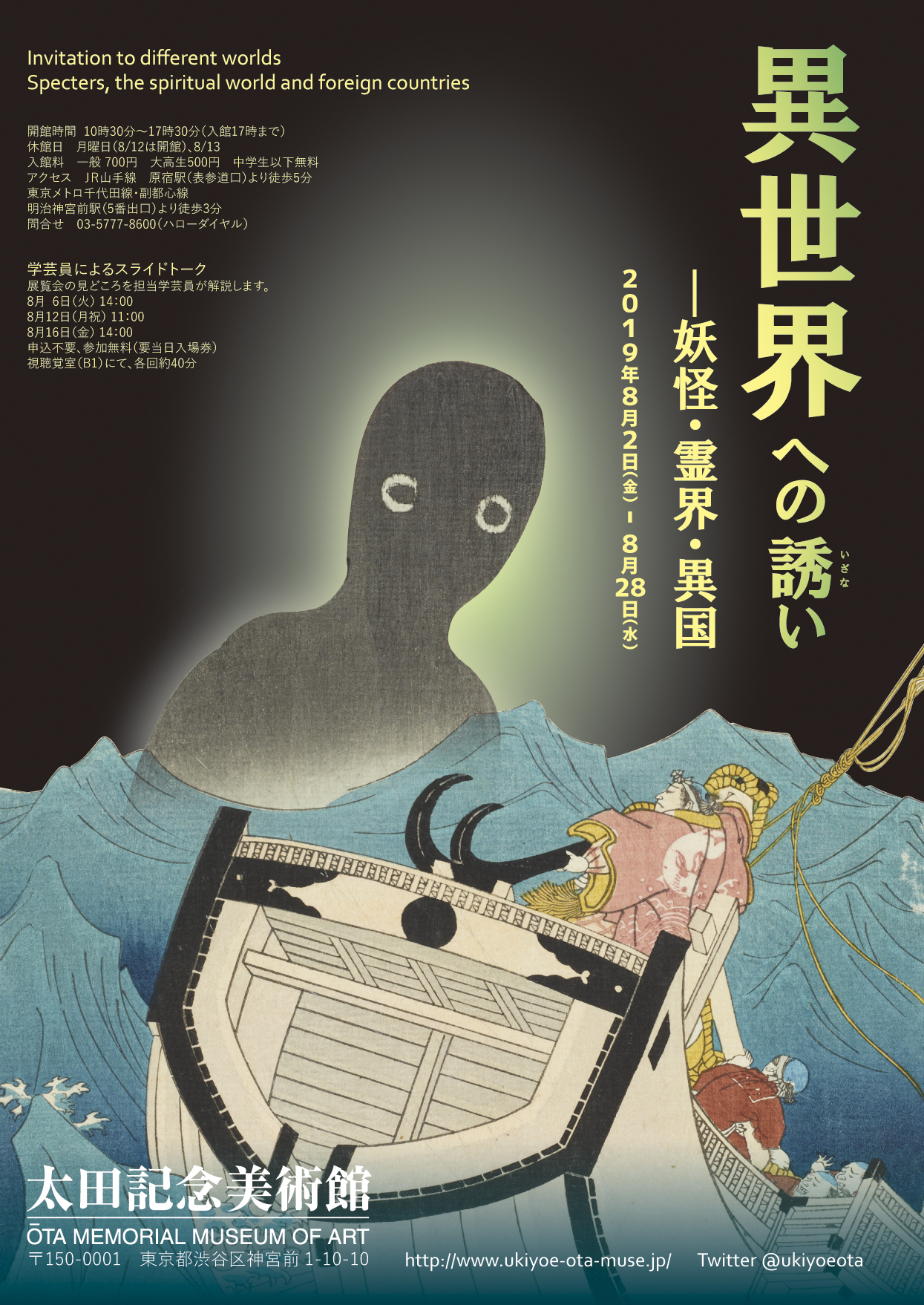
Ukiyo-e mostly depicts subjects of the pleasurable yet fleeting “ukiyo” (real world) such as popular kabuki actors and courtesans, as well as famous sites crowded with people. However, the real world is not the only subject of ukiyo-e. In some ukiyo-e paintings, landscapes of worlds which are completely different to those of the world we live in, and characters from these worlds are featured. In this exhibition, we will guide you through the various worlds depicted in ukiyo-e paintings with three themes – specters, the spiritual world and foreign countries. We hope you enjoy the encounters in the unreal worlds.
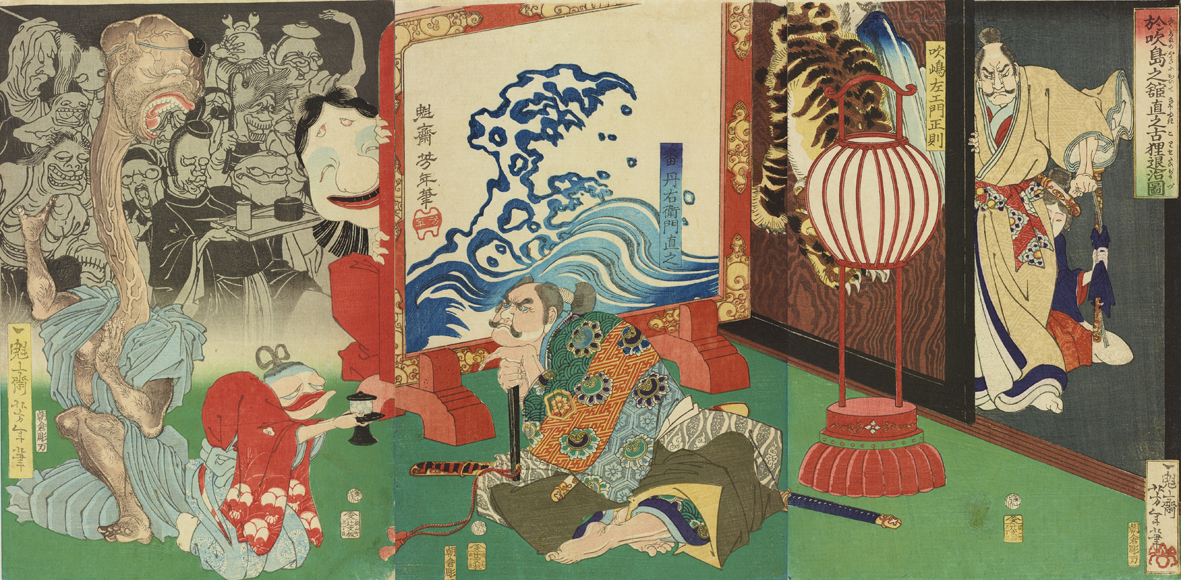
Tsukioka Yoshitoshi “Ban Danemon Naoyuki Defeating Specters Disguised by Raccoon Dogs”
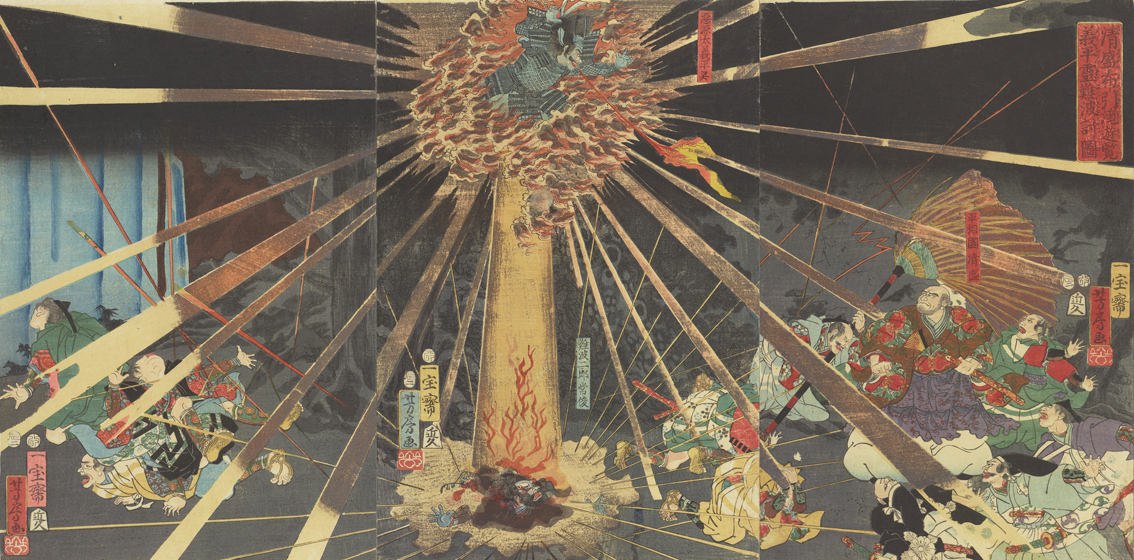
Utagawa Yoshifusa “Yoshihira’s Ghost Destroying Namba Jirō at Nunobiki Waterfalls”
Specters – Encounters with odd-looking creatures
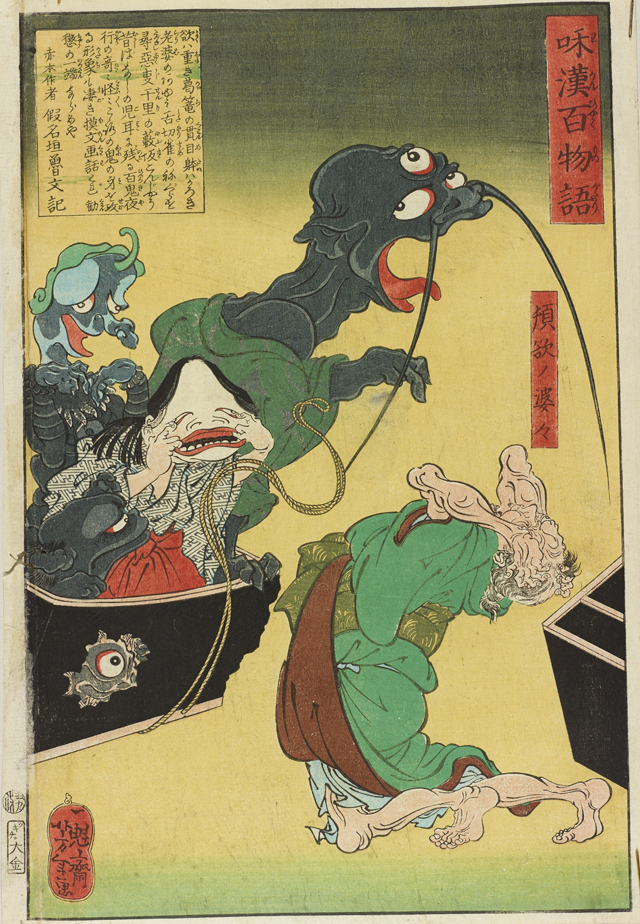
Tsukioka Yoshitoshi “One Hundred Ghost Stories of Japan and China: Insatiable Old Woman Opening a Box Filled with Specters”
Specters attempting to scare, or attack people are often depicted in ukiyo-e. Their appearances can be tremendously horrifying at times and humorous at others. There are also ukiyo-e of people confronting these odd-looking creatures without fear and defeating them. In this section, we will introduce the various monsters that come from different worlds.
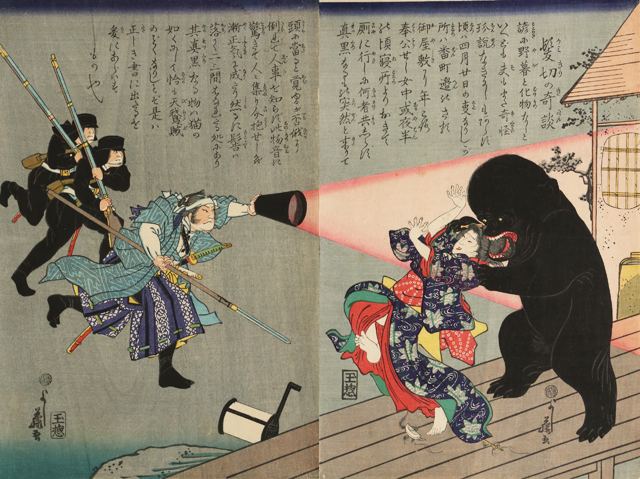
Utagawa Yoshifuji “Monster Cutting Woman’s Hair”
The spiritual world – Ghosts risen from the underworld
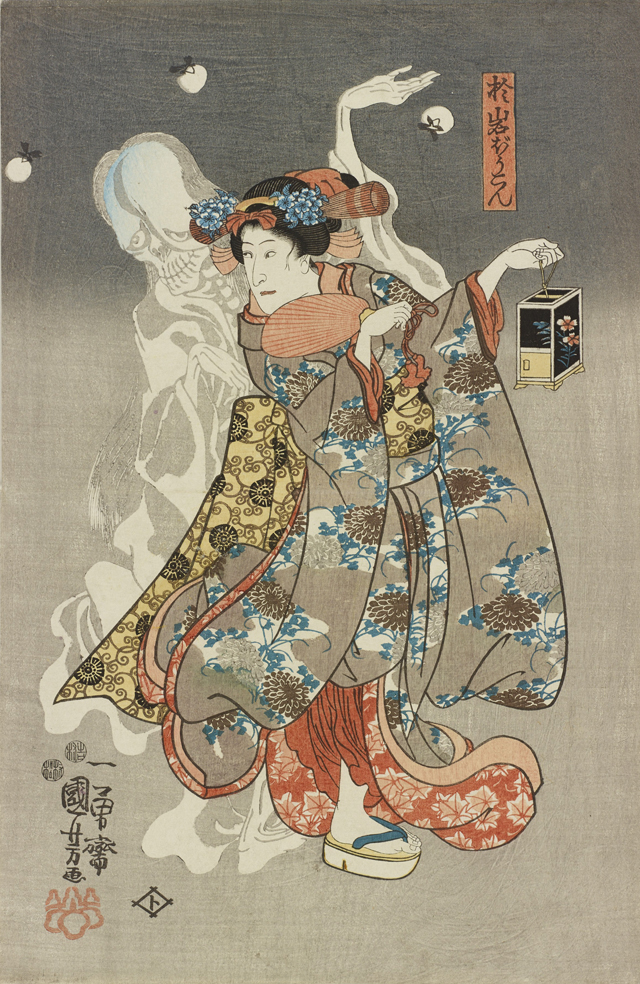
Utagawa Kuniyoshi “Kabuki Actor Ichikawa Kodanji Ⅳ as Ghost of Oiwa”
Stories of people coming back to this world as ghosts after being killed by villains were often performed in kabuki plays and made into ukiyo-e portraits of the kabuki actors. There are also peculiar works which depict the judge of the afterlife and demons being defeated by a dead person raging in hell. Here, we will introduce ghosts and the world after death depicted in ukiyo-e, as well as the memorial portraits to commemorate the people who had died, called “shini-e.”
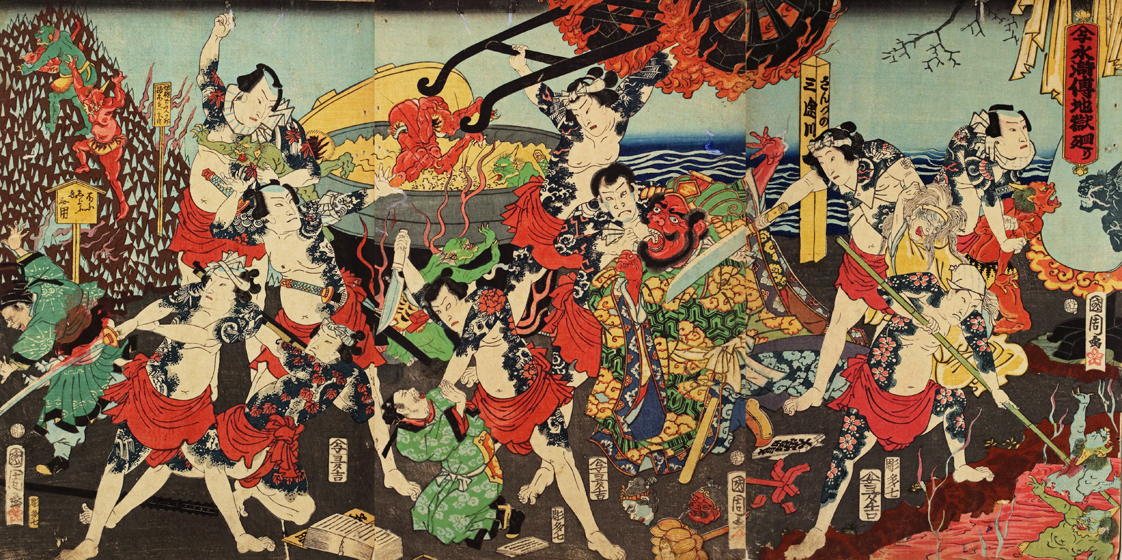
Toyohara Kunichika “Kabuki Actors Discipline Ogres at Hell”
Foreign countries – landscapes based on hearsay and imagination
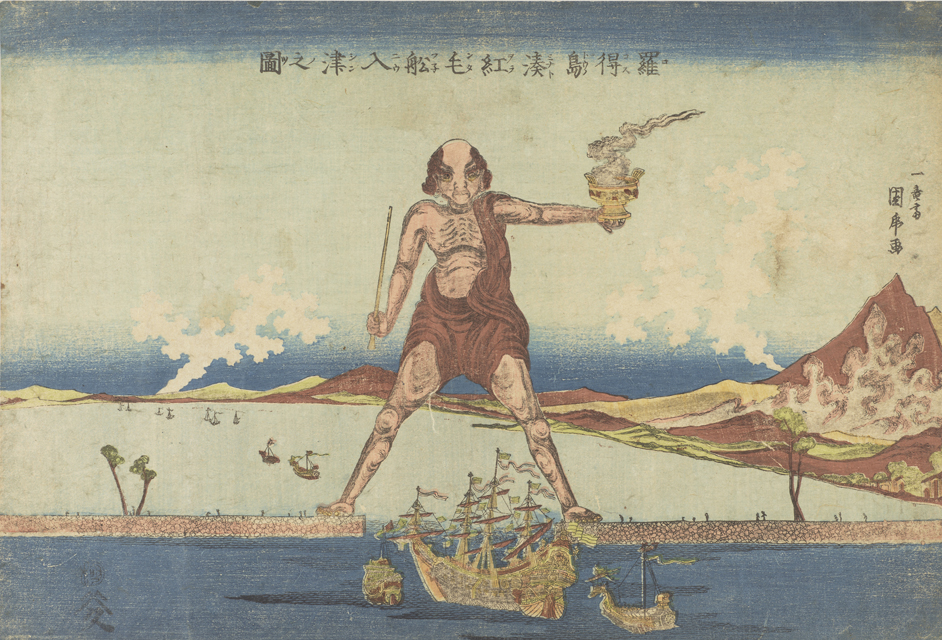
Utagawa Kunitora “European Ships Going into the Bay of Rhodes”
For people in the Edo period who had never been abroad or rarely had direct interactions with foreigners, foreign countries were beyond their imagination. The sceneries of these foreign countries were depicted in ukiyo-e, referring to limited documents, pictorial information, and sometimes fanciful imaginations. In this section, we will introduce works picturing Okinawa and Hokkaidō which were not part of Japan at the time, landscapes of China and Europe far across the ocean, and the foreign technologies such as steamships, trains and hot air balloons introduced to Japan at the end of the Edo period through the Meiji period.
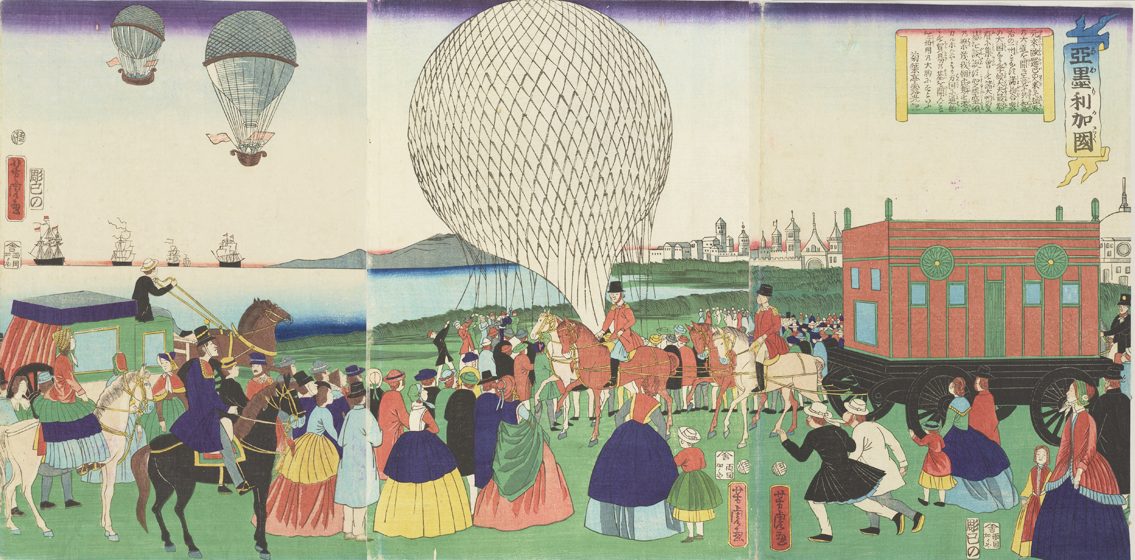
Utagawa Yoshitora “View of America”
Featured Work
Utagawa Kuniyoshi “Pairs for the Fifty-three Stations of the Tōkaidō Road: Kuwana, Sailor Tokuzō Looking at a Sea Goblin”
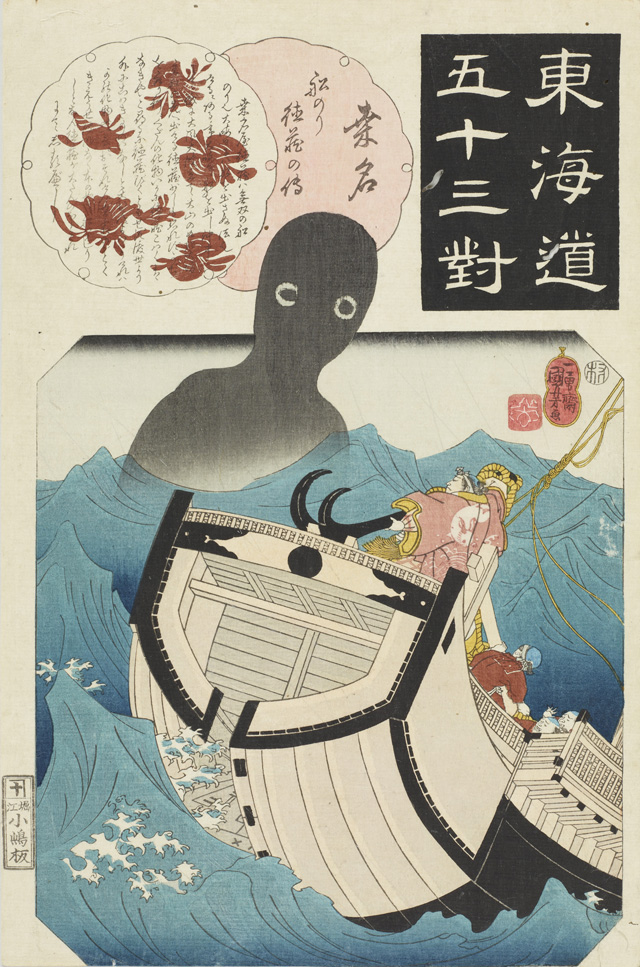
A sailorman Kuwana Tokuzō ignores the rule that he should not set sail on New Year’s Eve and encounters a huge sea monster called “umibōzu” offshore. Umibōzu asked Tokuzō if he was scared, but contrary to the expectation of umibōzu, he answers that living in this world is much scarier. Umibōzu was awed by Tokuzō of what he said and disappeared. With umibōzu depicted with only dim eyes in a black shadow, this is an impressive work of the creepy appearance of umibōzu coming from a different world.
Admission
Adult 700 yen University and High school students 500 yen Junior High School Students and below Free Calendar
Closed
-
-
-
-
2019 August
SUN MON TUE WED THU FRI SAT 1 2 3 4 5 6 7 8 9 10 11 12 13 14 15 16 17 18 19 20 21 22 23 24 25 26 27 28 29 30 31 - ①9/3~9/29 「生誕250年記念 歌川豊国 ―写楽を超えた男」展
- ②10/4~10/27 「歌川国芳 ―父の画業と娘たち」展
- ③11/2~12/22 「ラスト・ウキヨエ 浮世絵を継ぐ者たち ―悳俊彦コレクション」展
秋の歌川派フェスタ 豊国から国芳、芳年へ
2019年後半、太田記念美術館では歌川派を連続特集!
太田記念美術館では、9月には国芳の師匠である歌川豊国の展覧会を、11・12月には国芳の門人である月岡芳年とその弟子たちを含めた明治の浮世絵師たちの展覧会を開催します。これらの3つの展覧会を通してご覧いただくことで、豊国―国芳―芳年といった歌川派の系譜をたどることができます。
3つの展覧会すべてにご来場いただいたお客様にオリジナルエコバッグをプレゼント。
3種類のチケット半券を集めて当館受付にお持ちください。エコバッグと引き換えます。
プレゼントの引き換えは11月2日(土)から、なくなり次第終了します。
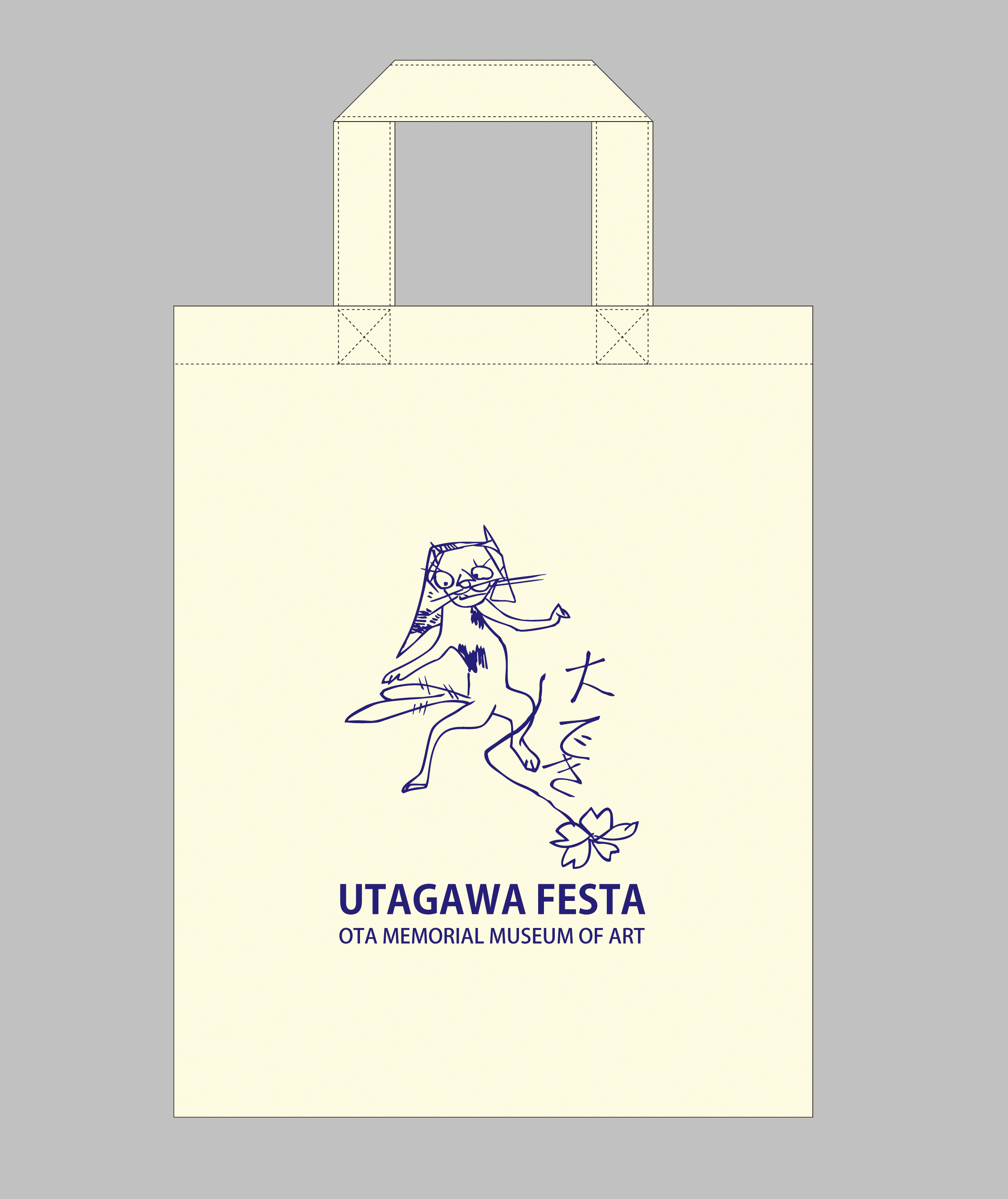
《ほめ猫エコバッグ》
国芳の猫が「大でき大でき」といつもほめてくれるエコバッグ。A4サイズもすっぽり入ります。太田記念美術館オリジナル。
※画像は仕上がりのイメージです。変更されることもございますのでご了承ください。
※展覧会チケット3種1組につきプレゼント1個と引き換えます。
※当館年間パスポート会員の方は、スタンプ台紙を送付しますので、ご来館時にスタンプを集めてお引き換えください。
→8月24日に展覧会情報に同封して発送いたしました。
※チケット、スタンプ台紙を紛失した場合、再発行はできません。
※招待券、各種無料入館は対象外です。 -
-
-
-
歌川国芳 ―父の画業と娘たち
歌川国芳の代表作を年代順に紹介
近年、人気が急上昇している歌川国芳。水滸伝の豪傑や巨大な骸骨を描いた迫力あふれる武者絵や、西洋画の表現を取り入れた風景画、さらにはユーモアたっぷりな筆致で描いた戯画など、代表作を含めた約80点の作品を紹介します。年代順に紹介しますので、国芳の画業の変遷を、時代背景と共に鑑賞することができます。
歌川国芳「相馬の古内裏」(個人蔵)
歌川国芳「讃岐院眷属をして為朝をすくふ図」(個人蔵)
歌川国芳「通俗水滸傳豪傑百八人之壹人 浪裡白跳張順」(太田記念美術館蔵)
歌川国芳「荷宝蔵壁のむだ書」(太田記念美術館蔵)
歌川国芳「東都三ツ股の図」(個人蔵)
歌川国芳の娘たちも浮世絵師だった!
浮世絵師の娘と言えば、葛飾北斎の娘である葛飾応為(お栄)が有名でしょう。しかしながら、浮世絵師の娘が絵師の仕事をしているというのは、応為だけではありません。実は、歌川国芳には2人の娘がおり、それぞれ芳鳥、芳女という画号で浮世絵を描く仕事をしていました。残された点数はわずかですが、2人の娘たちの画業についても紹介します。
歌川国芳・歌川芳鳥「東都流行三十六会席 向島 葱売宿直之介」(個人蔵) ※人物を国芳、背景を芳鳥。芳鳥14歳の作。
歌川芳鳥「武具尽両面合」(太田記念美術館藏) ※芳鳥15歳の作
歌川芳女「五節句の内 三節の見立 新材木町 新乗物町」(個人蔵) ※芳女21歳頃の作
浮世絵の歴史を深く学ぶ #秋の歌川派フェスタ
太田記念美術館では、9月には国芳の師匠である歌川豊国の展覧会を、11・12月には国芳の門人である月岡芳年とその弟子たちを含めた明治の浮世絵師たちの展覧会を開催します。これらの3つの展覧会を通してご覧いただくことで、豊国―国芳―芳年といった歌川派の系譜をたどることができます。また、歌川派について掘り下げる特別講演会や若手研究者講演会も開催いたします。
3つの展覧会すべてにご来場いただいたお客様にオリジナルグッズをプレゼント。
3種類のチケット半券を集めて当館受付にお持ちください。オリジナルグッズと引き換えます。プレゼントの引き換えは11月2日(土)から、なくなり次第終了します。※展覧会チケット3種1組につきプレゼント1個と引き換えます。
※当館年間パスポート会員の方は、スタンプ台紙を送付しますので、ご来館時にスタンプを集めてお引き換えください。
※チケット、スタンプ台紙を紛失した場合、再発行はできません。
※招待券、各種無料入館は対象外です。見どころの作品
歌川国芳「江都勝景中洲より三つまた永代ばしを見る図」(個人蔵)
国芳がこっそり描いた愛娘の姿
子どもたちが凧あげや羽根つきをして遊んでいる正月の風景。そのうちの一人の女の子の着物に、年玉印(歌川派の絵師がサインに用いる印)に「とり」という文字が入っていることから、この女の子は国芳の長女「とり」ではないかという指摘があります(岩切友里子『カラー版 国芳』岩波新書、2014年)。この頃のとりの年齢は3~4歳。国芳が40歳を過ぎてから生まれた娘でしたので、可愛さのあまり、自分の作品の中にこっそり描き込みたくなったのかもしれません。イベント
学芸員によるスライドトーク
展覧会の見どころを担当学芸員が解説します。
日時 会場 太田記念美術館 視聴覚室(B1) 参加方法 申込不要 参加無料(要入場券) 特別講演会
演題 「国芳の娘たち -芳鳥・芳女の生涯と画業」 日時 10月14日(月・祝) 14:00~15:30 講師 日野原健司(太田記念美術館主席学芸員) 会場 太田記念美術館 視聴覚室(B1) 定員 100名 参加方法 当日10:45よりB1視聴覚室前にて整理券配布(お1人さま1枚。当日入館券またはパスポート会員証をご提示ください)
参加無料(要入場券)若手研究者講演会
演題 「初代豊国門下の中堅三羽烏 -国安・国丸・国直について-」 日時 10月5日(土) 14:00~15:30 講師 兼松藍子(藤沢市藤澤浮世絵館学芸員) 会場 太田記念美術館 視聴覚室(B1) 参加方法 申込不要 参加無料(要入場券) 入館料
一般 700円 大高生 500円 中学生以下 無料 *中学生以上の学生は学生証をご提示下さい。
*団体(10名以上)は1名さまあたり100円引き。 (一括にてお支払い願います。事前のお申し込みにご協力ください。)
*障害者手帳提示でご本人とお付き添い1名さま100円引き。
*その他各種割引についてはお問い合わせください。
*料金は消費税込み。
開館日カレンダー
休館日
-
-
-
-
-